Pimkie x Shein: Ethical Scandal and Justice in 2025
The partnership between Pimkie and Shein sparks a scandal in 2025, balancing ethical challenges, protests, and a legal battle.
Aurelia
21 September 2025
The partnership between Pimkie and Shein is triggering a scandal in 2025. Between ethical issues, protests, and a legal battle, a look back at an affair shaking up French fashion. The partnership between Pimkie and Shein, announced for late 2025, has sent shockwaves through the French fashion sector.
"The fashion of tomorrow is played out today: between speed and values, a choice must be made." – Orzyla
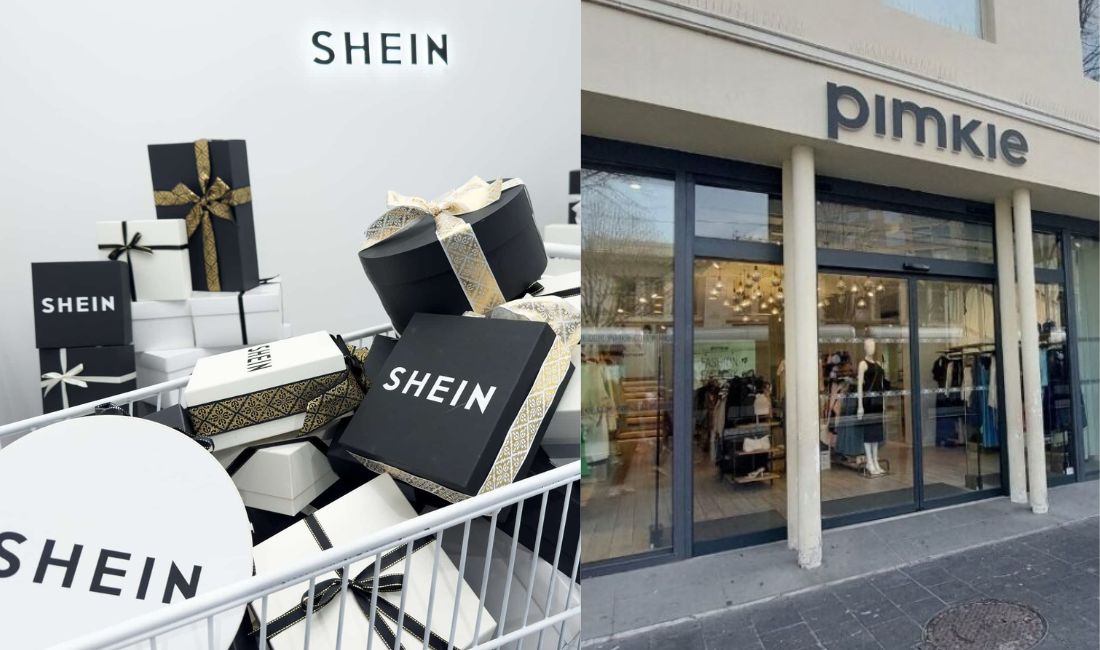
The partnership between Pimkie and Shein, announced for late 2025, has sent shockwaves through the French fashion sector. Pimkie, an emblematic women's ready-to-wear brand, is teaming up with Chinese fast fashion giant Shein to offer its products directly on the online platform. This rapprochement raises serious ethical, social, and environmental concerns.
In 2025, French fashion is shaken by an affair that extends far beyond a simple commercial framework. The partnership between Pimkie, a historic ready-to-wear brand, and Shein, the Chinese ultra-fast fashion giant, has triggered a genuine ethical scandal. Amid accusations of social dumping, environmental concerns, and protests by professional unions, the affair is now taking a legal turn. The Mulliez family, former owners of Pimkie, has announced its intention to take legal action to have this controversial agreement annulled.
Background of the Pimkie x Shein Partnership
In early 2025, the announcement came like a bombshell in the French fashion industry: Pimkie, a brand founded in 1971 and long a symbol of accessible fashion for young women, is joining forces with the Chinese giant Shein, the global champion of ultra-fast fashion.
The official objective of this partnership was clear: to give a second wind to Pimkie, which had suffered for several years from declining in-store foot traffic and a loss of momentum against more aggressive digital competitors. By backing Shein, Pimkie hoped to benefit from:
- privileged access to the ultra-fast logistics of the Chinese giant,
- increased visibility on the international market,
- a strengthening of its e-commerce offering against Zara, H&M, and Mango.
Yet from the very announcement, questions multiplied. The image of Shein, regularly criticized for its social and environmental practices, contrasted sharply with Pimkie's heritage, long associated with a certain idea of accessible and convivial French fashion.
In the eyes of many observers, this alliance represented less a revival than a risky gamble, where Pimkie's economic survival could collide with an ethical legitimacy crisis.
An Ethical Scandal Setting Fashion Ablaze
From the moment the partnership was announced, the reaction was immediate. The French Federation of Women's Ready-to-Wear (FFPAPF) condemned the Pimkie x Shein agreement, going so far as to call it a "conspiracy of wrongdoers" in September 2025. A striking phrase illustrating the scale of the controversy.
In an official press release, the federation recalled that this alliance "sends a catastrophic signal to the entire fashion industry," already weakened by the closures of historic brands and safeguard plans. For the record, Pimkie was placed under a safeguard plan in November 2024, a sign of the brand's financial difficulties.
Criticism focuses on several key points:
- Social rights and working conditions: Shein is regularly accused of opacity regarding its production practices.
- Environmental issues: the overproduction of low-priced clothing is deemed incompatible with the ecological transition.
- Fair competition: platforms like Shein evade certain taxes and standards, weakening French players.
- Support for the local sector: at a time when relocation and support for SMEs are at the center of debates, such a partnership seems to go against the grain.
The FFPAPF even directly challenged Salih Halassi, CEO of Pimkie, calling on him to abandon this project deemed "dangerous for the future of French fashion."
Simultaneously, the protest spread to social media, with hashtags such as #BoycottPimkie or #StopShein. Consumers, independent designers, and committed influencers denounced a betrayal of the ethical and ecological values that French fashion strives to defend.
Within days, the partnership became a case study in the tension between economic survival and ethical responsibility.
The Mulliez Family Fights Back
While media and sectoral controversy was already intense, the affair took on a new dimension when the Mulliez family, former owners of Pimkie and a historic figure in French retail (Auchan, Kiabi, Decathlon…), announced their intention to take legal action.
For the Mulliez family, this partnership with Shein represents a betrayal of Pimkie's DNA, a brand they founded and developed as a symbol of popular French fashion. In a press release relayed by FashionUnited, the family denounced a "drift contrary to the values and heritage of the company."
Their legal action aims to secure a review or even an annulment of the partnership on the grounds that it:
- harms Pimkie's image by associating it with a controversial company,
- contradicts the ethical commitments defended by the brand in the past,
- endangers the French sector by giving a competitive advantage to a multinational that escapes certain regulations.
This intervention is not merely symbolic. It serves as a reminder that Pimkie, despite its difficulties, remains a culturally significant player in France, and that its rapprochement with Shein goes beyond the scope of a simple commercial contract.
The legal action by the Mulliez family could also set a precedent: it raises the question of the ethical responsibility of international partnerships and how French justice can regulate these controversial alliances.
Shein: Between Blistering Growth and Global Controversies
It is impossible to understand the scope of the Pimkie affair without placing Shein in its global context. In less than a decade, the Chinese giant has established itself as one of the world's most powerful fashion players, sometimes surpassing Zara and H&M in digital market share.
Its model relies on an unrelenting recipe:
- ultra-fast production capable of launching thousands of new references a day,
- rock-bottom prices that massively appeal to Generation Z,
- an aggressive communication strategy via TikTok and Instagram, turning every consumer into a micro-influencer.
Yet behind this economic success, Shein carries a long list of controversies:
- Working conditions: international investigations have revealed workshops where workers labor over 70 hours a week in precarious conditions.
- Intellectual property: the brand has been accused on multiple occasions of plagiarizing independent designers, leading to legal actions.
- Environment: ultra-fast fashion is singled out for its role in textile overproduction and the mountains of waste generated globally.
- Tax evasion and regulations: Shein is in the sights of European and American authorities, accused of taking advantage of regulatory loopholes (VAT exemptions on small packages, lax safety standards).
Facing these criticisms, Shein attempts to polish its image by regularly announcing sustainable development programs, collaborations with designers, or promises of transparency. Yet for many observers, these initiatives amount to greenwashing rather than a genuine shift in its business model.
In this context, the alliance with Pimkie, a French brand already weakened yet still emblematic, is seen as an attempt at local legitimization—a way for Shein to penetrate the European market even deeper by relying on a brand familiar to consumers.
Thus, the affair concerns more than just Pimkie: it is part of a global debate on the excesses of fast fashion and the limits of globalization applied to fashion.
What Future for Pimkie and French Fashion?
The controversial alliance between Pimkie and Shein raises a fundamental question: what place remains for French and European brands in a market dominated by globalized fast fashion?
For Pimkie, this strategy may seem like a lifeline. The brand, losing momentum for years, hopes to leverage Shein's digital power to reach a new generation of customers and revive its sales. Yet the risk is immense: by partnering with such a heavily criticized player, Pimkie could lose its identity and legitimacy with an audience increasingly sensitive to issues of ethics and sustainability.
On the side of French fashion, this partnership illustrates a broader concern:
- The erosion of national brands facing global giants.
- The pressure on local textile sectors, already weakened by unfair competition from ultra-low prices.
- The danger of seeing European know-how disappear in favor of an economic model based purely on volume and speed.
According to some analysts, Pimkie's future will depend on its ability to reinvent its positioning:
- either by betting on ultra-fast fashion with Shein, at the risk of completely losing its DNA,
- or by striving to champion a more responsible and differentiating model, much like French brands winning customers over through authenticity.
Regardless, this affair marks a symbolic turning point. It highlights the fractures between the quest for immediate profitability and the aspirations of consumers demanding more transparency, social respect, and sustainability.
As a sector expert points out:
"Pimkie is playing its last card. But by joining forces with Shein, it risks losing the trust of those who still believed in it."
For French fashion, the challenge is now clear: choose between the ease of globalized fast fashion and the construction of a more virtuous and sustainable model.
Pimkie Faces a Crucial Choice
The partnership between Pimkie and Shein extends far beyond the scope of a simple commercial agreement. It crystallizes the current tensions in global fashion: between economic preservation and ethical responsibility, between the survival of historic brands and the hegemony of digital giants.
For Pimkie, the operation could represent an opportunity for survival, but it comes with a risk of identity erasure and rejection by a portion of the clientele attached to more sustainable values.
This affair also highlights a broader dilemma: the future of French fashion. Must it yield to the logic of ultra-fast fashion to remain competitive, or on the contrary, bet on local creation, quality, and transparency?
Whatever happens, the Pimkie–Shein partnership will remain a case study in the sector's history—a striking example of the collision between immediate profitability and societal issues.
"When fast fashion meets controversy, fashion's entire ethics wavers." – Orzyla
Also on Orzyla:
Temu makes its mark in France: top 15 in apparel
Shein announces opening in France: at BHV & Galeries Lafayette
Comments
Comments are coming soon.