Recycled Gold: Sustainable Revolution or Marketing Illusion?
Recycled Gold: A sustainable revolution or simple marketing pitch? Orzyla analyzes its stakes between ethical jewelry, transparency, and greenwashing.
Aurelia
15 April 2026
For a few years now, one term has taken over all communication from jewelry brands: recycled gold. Presented as a responsible alternative to mining, it embodies a new vision of luxury—more conscious, more sustainable, and more aligned with the expectations of modern consumers.
“Buying a responsible piece of jewelry should not be an act of faith, but an informed choice.”
Yet behind this seductive promise, a question remains: is recycled gold truly an ecological revolution, or simply a well-crafted new marketing argument?
At a time when transparency is becoming an essential purchasing criterion, Orzyla decodes a major trend redefining the contours of contemporary jewelry.
An evolution that aligns with the rise of sustainable jewelry and ethical fine jewelry in 2026.
Recycled Gold: Definition and Promise
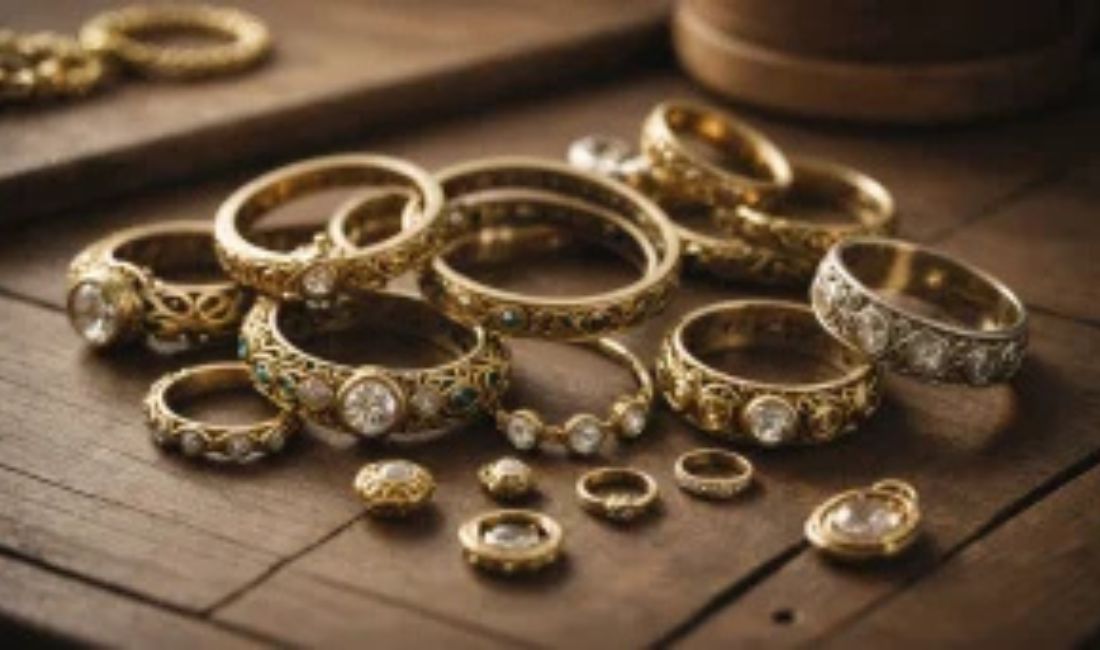
Recycled gold refers to precious metal recovered from existing materials:
- old jewelry
- electronic components
- industrial waste
Unlike newly mined gold, it requires no new mining operations, which are often criticized for their environmental and human impact.
On paper, the promise is strong:
- reduction of the carbon footprint
- limitation of mining exploitation
- circular economy
An argument that immediately appeals to a new generation of consumers, who are more attentive to the impact of their purchases.
A Response to an Industry Under Pressure
The jewelry industry faces growing criticism regarding:
- soil and water pollution
- working conditions in certain mines
- conflicts related to resource exploitation
In this context, recycled gold appears as an obvious solution.
Brands have understood this well and are now massively integrating it into their collections. The message is clear: buying recycled gold jewelry means making a responsible choice.
Yet this reality deserves to be qualified.
A Resource… Already Recycled Since the Beginning of Time
What is often forgotten is that gold has been recycled for centuries.
Unlike other materials, it does not degrade and can be melted down infinitely without losing its properties. In reality:
- a large portion of the gold in circulation has already been recycled multiple times
- the gold market has historically operated in a semi-closed loop
In other words, recycled gold is not a recent innovation, but rather an ancient practice brought back into the spotlight today.
Between Marketing and Reality: Where Does the Truth Lie?
The problem does not lie in recycled gold itself, but in the way it is presented.
What is true:
- it reduces dependence on mining extraction
- it gives value to existing resources
- it aligns with a more responsible approach
What is less clear:
- it does not completely eliminate the demand for newly mined gold
- traceability remains limited at times
- certain brands use the term without genuine transparency
The risk: transforming a technical reality into a simplified, even misleading marketing pitch.
The Crucial Issue of Traceability
One of the major challenges of recycled gold remains its traceability.
Once melted down, gold becomes impossible to distinguish:
- unknown origin
- mixture of diverse sources
- difficulty in certifying its journey
Some certifications exist, but they are not always understood by the general public.
Result: the consumer often has to trust blindly… without being able to verify.
Greenwashing: A Real Danger in the Jewelry Sector
As in other fashion sectors, jewelry is not immune to the phenomenon of greenwashing.
Certain brands:
- highlight "recycled gold" without specifying its origin
- exaggerate their actual ecological impact
- use vague messaging to appeal to buyers
The term thus becomes a powerful marketing tool, sometimes disconnected from genuine commitment.
Be careful, however: this does not mean all initiatives are superficial.
Truly Committed Brands
Faced with these excesses, certain houses are going further:
- transparency across the supply chain
- rigorous certifications
- small-scale production
- social and environmental commitment
These players are helping to restore meaning to the concept of responsible jewelry.
They sell not just a product, but a vision:
that of a more conscious, more sustainable, and more honest luxury.
Brands That Restore Meaning to Recycled Gold
While some houses ride the trend, others stand out as true pioneers, rethinking jewelry in a more transparent and responsible manner.
Among them, Courbet stands out as one of the first high jewelry houses to exclusively offer recycled gold and lab-grown diamonds. Located on Place Vendôme, the brand embodies a new vision of luxury that is both technological and ethical.
Another major player, Chopard, launched its “Journey to Sustainable Luxury” initiative back in 2018, committing to using certified ethical gold across all its collections. Such an approach is rare on this scale in the luxury universe.
On the independent designer side, Vrai relies on controlled production with lab-grown diamonds and complete traceability, while Monbouquette explores upcycling by transforming everyday objects into contemporary jewelry.
These initiatives, still in the minority, nevertheless sketch the contours of a more conscious jewelry industry where each piece tells a verifiable story.
3 Recycled Gold Jewelry Pieces Illustrating the Trend
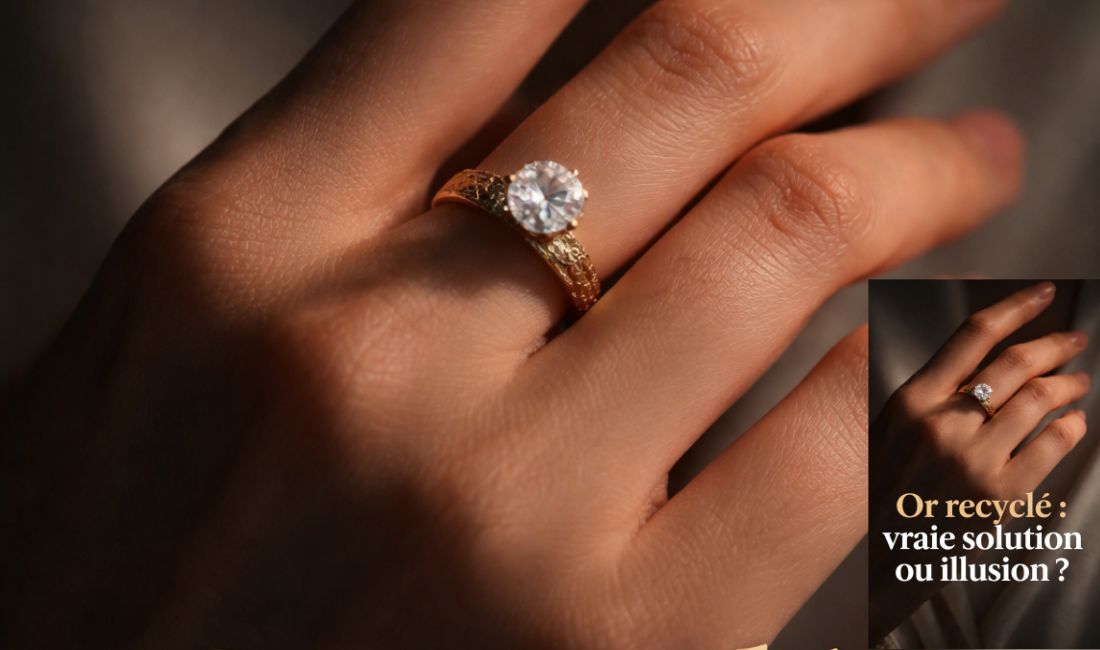
1. A Recycled Gold and Lab-Grown Diamond Ring
At Courbet, rings combine recycled gold with lab-created diamonds, drastically reducing environmental impact while retaining the brilliance of a precious stone.
Classification:
- Diamond = precious stone
2. An Ethical Certified Gold Bracelet
Chopard's collections offer bracelets made from certified ethical gold sourced from controlled, responsible channels.
An approach that reassures consumers searching for transparency.
3. A Contemporary Upcycled Piece
At Monbouquette, certain jewelry pieces are crafted from recycled objects, giving birth to unique creations with a strong artistic dimension.
Here, the impact is as creative as it is ecological.
The Key Role of Consumers
Today, the balance of power has shifted.
Consumers are:
- asking questions
- looking for proof
- comparing commitments
This demand pushes brands to evolve.
Buying a piece of jewelry is no longer just about its aesthetics or its price. It is also about understanding:
- where the materials come from
- how they are transformed
- what values they embody
Towards a New Luxury: Between Ethics and Desire
Recycled gold is part of a more global transformation of luxury.
A luxury no longer defined solely by:
- rarity
- prestige
- price
But also by:
- impact
- transparency
- history
Jewelry thus becomes an object carrying meaning, at the crossroads of fashion, ethics, and identity.
So, Revolution or Illusion?
The answer is neither entirely positive nor entirely negative.
✔️ Yes, recycled gold is a significant step forward
✔️ Yes, it contributes to a necessary transformation of the industry
Yet the reality remains more nuanced.
Recycled gold is not a perfect solution, but a relative improvement in a system still dependent on extraction.
⚠️ No, it is not enough on its own to make jewelry sustainable
⚠️ No, it must not be used as a mere marketing pitch
Recycled gold perfectly symbolizes the paradoxes of contemporary jewelry: between real progress and mastered storytelling.
More than a miracle solution, it represents a milestone in a broader evolution where every stakeholder—brands and consumers alike—has a role to play.
Because deep down, the true revolution lies not only in the materials, but in the way we choose to consume, create, and value jewelry.
Stay Connected with Orzyla!
Follow all upcoming events, trade shows, exhibitions, fashion, jewelry trends, beauty, and accessories at Orzyla— the media outlet revealing talents, trends, and sustainable innovations.
Related tags
Comments
Comments are coming soon.