The “Pépite” Workshop: Cartier’s Artisans of Tomorrow
With “Pépite,” Cartier is investing in youth and golden hands: a workshop of excellence to prepare the jewelers of the future.
Aurelia
09 October 2025
“Passing on a skill is offering a share of eternity.” – Atelier Pépite, Cartier
Cartier is betting on youth and the transmission of tomorrow’s artisans. Through the Pépite workshop, the Maison is training the new generation of fine craft artisans in a space dedicated to high precision and creativity. Combining excellence, work-study programs, and expertise, Cartier is reshaping fine craft training for the future of French jewelry.
Cartier Excellence: Between Heritage and Future
Since its founding in 1847, Cartier has always considered craftsmanship as the beating heart of its identity. If its jewels embody perfection, it is because they are born in the hands of artisans trained in rigor, patience, and emotion.
In 2025, the Maison takes a new step forward with the creation of the Pépite workshop, a unique work-study program where young talents and master jewelers meet, exchange, and perpetuate the tradition of beauty.
Pépite: A Nursery for Artisans of Excellence
Launched in Paris at the center of the Maison's workshops, Pépite is not merely a learning space: it is a laboratory of excellence. Cartier trains around thirty apprentices each year in high jewelry crafts—stone setting, polishing, jewelry-making, technical drawing, 3D design, and precious metal management.
The Workshop's Objectives:
- Pass on traditional expertise.
- Train artisans capable of mastering modern technology (CAD, 3D printing, laser).
- Preserve the rigor and high standards that define the Maison's reputation.
Each apprentice is mentored by a master artisan, the guardian of Cartier excellence. Teaching is based on observation, daily practice, and the appreciation of gesture.
A Method Based on Work-Study and Transmission
Cartier understands that the next generation can only be built through human contact. The Pépite initiative follows a demanding work-study model: apprentices spend part of their time in the Maison's workshops and another part at partner schools specializing in jewelry, design, and gemology.
Partner Schools
| School | Specialty | Location |
|---|---|---|
| Haute École de Joaillerie | Jewelry techniques and stone setting | Paris |
| BJO Formation | Design and polishing | Lyon |
| Richemont Institute of Craftsmanship of Excellence | Work-study training and certification | France / Switzerland |
- Haute École de Joaillerie (HEJ) – primary partner of Cartier for the training of apprentices, with a dedicated class since 2023.
- Richemont Institute of Craftsmanship of Excellence (IME) – the certifying body of the Richemont group, overseeing work-study paths.
- BJO Formation (in Lyon) – historical partner for specific technical specialties, confirmed across several Richemont programs.
Objective of the Pépite Program: train artisans in stone setting, jewelry-making, polishing, and 3D drawing, combining craftsmanship and innovation.
Location: apprentices split their time between Cartier workshops in Paris and partner schools. Launch: 2024–2025 (expansion phase of the project already underway since 2023 with the “Cartier class”).
Pedagogical Approach: work-study, mentoring by master artisans, digital integration (CAD, 3D printing, laser).
This synergy creates a comprehensive learning environment: technique meets creation, and inspiration is born in contact with heritage.
Craftsmanship and Innovation: The Alliance of Gesture and Digital
At Cartier, tradition never excludes modernity. Young artisans learn to wield the jewelry file just as skillfully as the 3D scanner. The goal: to understand that the human hand remains the primary precision tool, but technology allows them to push the boundaries of what is possible.
Key innovations integrated into the Pépite workshop:
- Digital modeling to prepare prototypes.
- Micro-laser to set fine stones without damaging them.
- Wax 3D printing to design high-precision models.
These tools do not replace the human hand: they extend it. Cartier teaches its apprentices to blend artisanal instinct with technological intelligence.
Emblematic Jewels Born from Transmission
Every generation of Cartier artisans has helped shape iconic pieces. Thanks to this transmission, legendary creations continue to evolve without betraying their essence.
| Collection | Expertise Transmitted | Details |
|---|
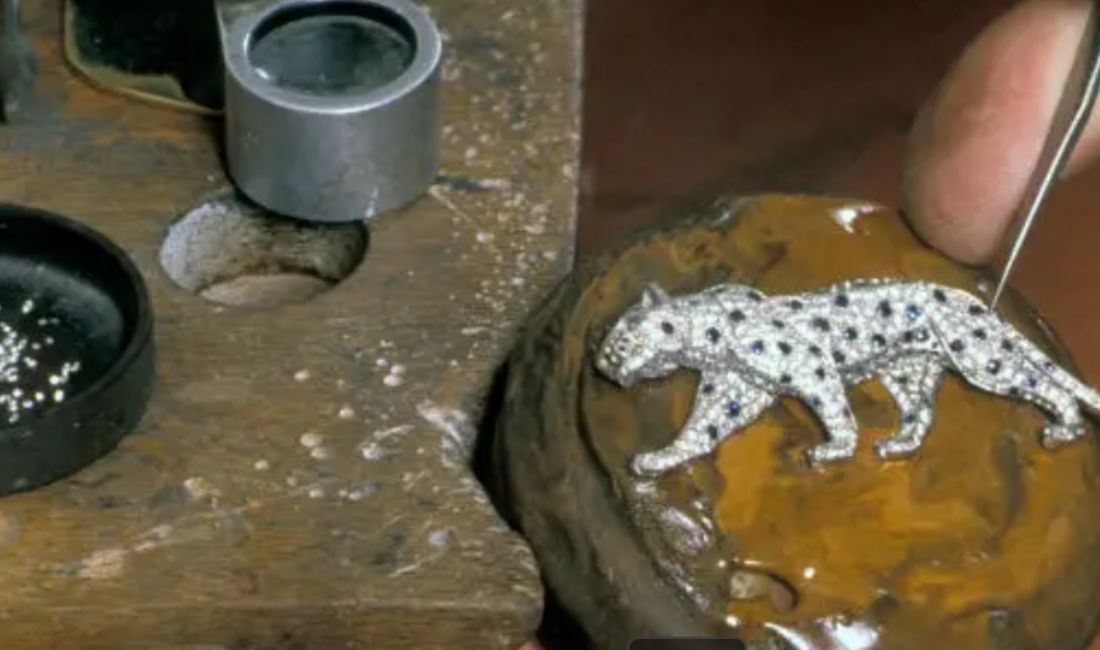
| Panthère de Cartier | Stone setting and sculpture | The iconic feline, born in 1914, continues to fascinate. |
| Trinity | Three-tone gold assembly | Created in 1924, perfected by generations of artisans. |
| Clash de Cartier | Technical innovation | Combination of polished and studded gold, requiring hybrid expertise. |
These jewels stand as proof that excellence is not a frozen heritage, but a perpetual movement.
On the same subject:
- Pregnant Selena Gomez? She Inspires 2026 Maternity Fashion
- 8 Wedding Trends 2026–2027: Style and Inspirations
- Mother's Day: Gift Ideas and Traditions Around the World
Pépite: A Human Adventure Above All
Beyond techniques, the Pépite workshop is an experience of human transmission. Young artisans learn humility, precision, and rigor there—alongside the pride of belonging to a Maison that values both hand and mind. Master jewelers, some with over 30 years of experience, find a renewed sense of inspiration by sharing their knowledge.
“To teach is to learn twice.” – Testimony of a Cartier master jeweler.
Apprentices frequently speak of the emotion felt the first time they hold a fine jewelry piece between their fingers: a suspended, almost sacred moment.
The Impact on French Jewelry
Cartier does not train solely for its own workshops. The Pépite project is part of a broader dynamic: the preservation of French artisanal heritage. With the rise of sustainable luxury and local production, this approach is becoming a model for other Maisons.
Main Challenges:
- Combating the shortage of skilled art artisans.
- Sustaining rare crafts (setter, polisher, jewelry designer).
- Promoting learning through practice.
The impact is concrete: several apprentices trained at Cartier subsequently join other fine jewelry houses, ensuring the overall vitality of the sector.
Toward Exporting the Pépite Model?
Luxury experts agree: Cartier is paving the way for a sustainable model of transmission. The Pépite program could inspire other Richemont group houses (Van Cleef & Arpels, Piaget) as well as independent players wishing to relocate their production to Europe.
Expertise has become a geopolitical issue: training is about guaranteeing the sovereignty of French luxury. By placing youth at the center of its program, Cartier reaffirms that the future of luxury passes through the human hand.
Cartier reaffirms with Pépite that luxury is above all a matter of hand, mind, and heart. By training the artisans of tomorrow, the Maison is not merely perpetuating its heritage: it is reshaping the place of craftsmanship in the world of contemporary luxury. Through every set stone and polished metal, a lesson in patience and beauty is passed down—and that is perhaps the true Cartier signature.
FAQ
What is the Cartier Pépite workshop?
It is a training workshop launched in 2025 by Cartier, dedicated to jewelry apprentices, aiming to transmit fine jewelry expertise.
Who can apply?
Young people trained in jewelry or craft schools can submit their applications via school partnerships.
What is the difference between an artisan and a master jeweler?
The master jeweler oversees and designs the most complex pieces while training young artisans in precision and creativity.
Why is Cartier investing in training?
Because the sector is facing a talent shortage. The Maison wants to preserve its excellence while innovating.
Where is the Pépite workshop located?
In Paris, at the heart of the Cartier headquarters, in a space designed for transmission and creation.
Other training paths for jewelers and goldsmiths
Comments
Comments are coming soon.