Freshwater Pearl Trends: 2026 Expert Guide
Freshwater pearls: definition, quality, price, and 2026 trends. Complete guide on how to recognize an authentic pearl and make the right choice.
Aurelia
22 April 2026
Long considered an accessible alternative, freshwater pearls are now establishing themselves as an aesthetic and sustainable choice, capable of rivaling the historical references of fine jewelry.
“Freer, more modern, freshwater pearls are redefining the codes of classic jewelry in 2026, bridging jewelry heritage and contemporary style.”
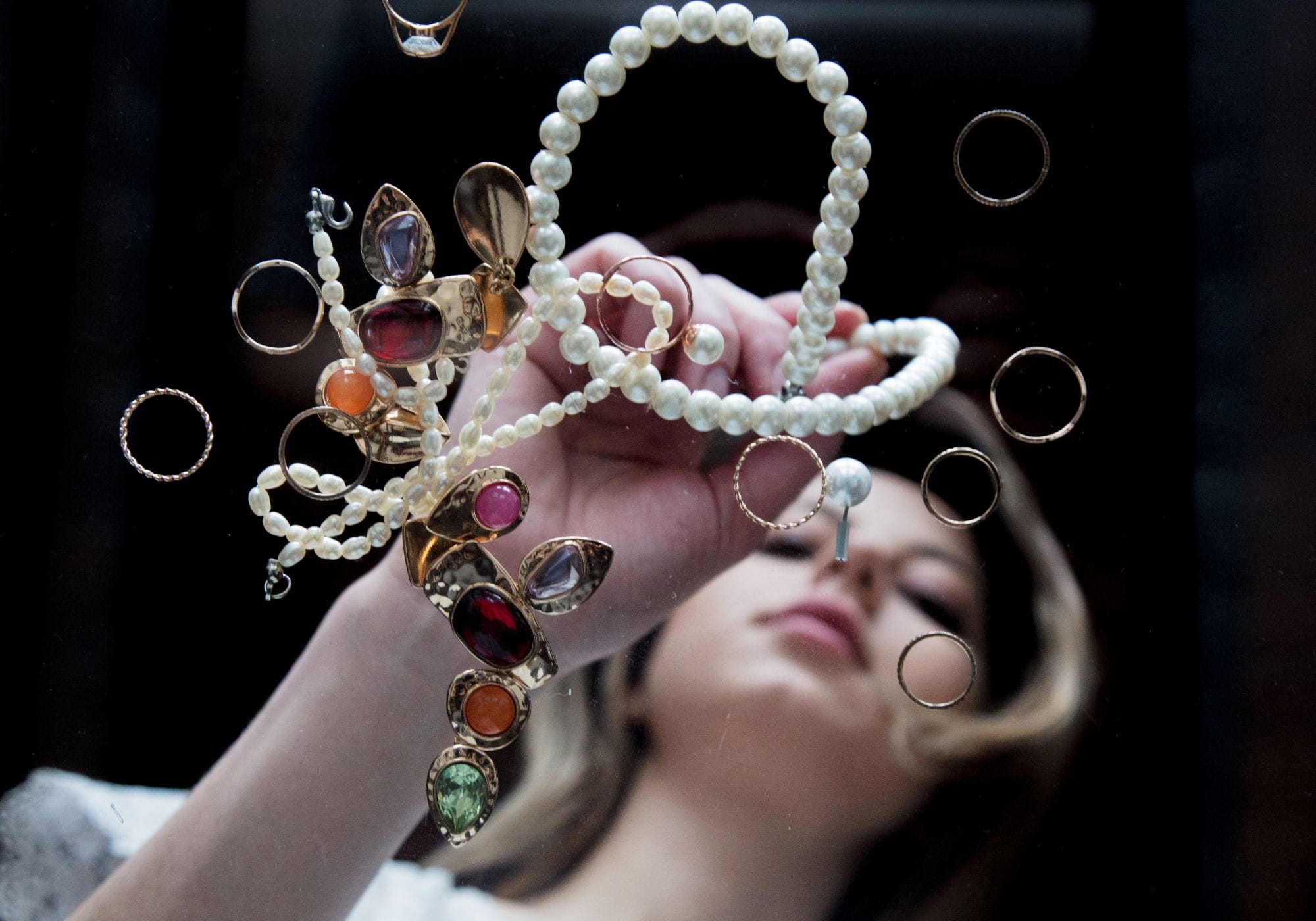
In 2026, freshwater pearls emerge as one of the most versatile gems on the market, deeply rooted in tradition yet resolutely contemporary. They appeal just as much to classical jewelry aficionados as to new generations in search of freer, more expressive pieces.
What is a freshwater pearl?
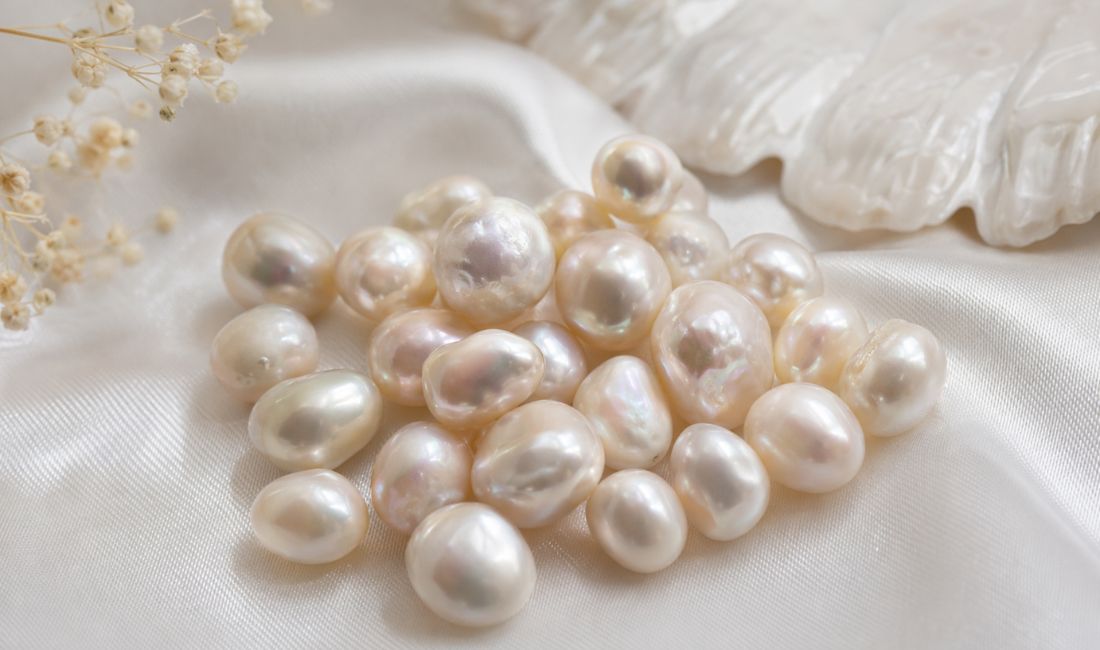
A freshwater pearl is an organic gemstone produced by a freshwater mollusk living in lakes or rivers, primarily of the genus Hyriopsis.
Unlike saltwater pearls, it is generally formed without a spherical nucleus. The pearl is therefore made almost entirely of nacre, deposited layer by layer around a tissue graft inserted into the mollusk.
This structural peculiarity explains several essential characteristics:
- a wide diversity of shapes (round, baroque, irregular)
- a softer, more satin-like texture than certain marine pearls
- more abundant production, allowing for more accessible pricing
Today, China concentrates the bulk of global freshwater pearl production, thanks to highly developed and industrialized pearl-farming expertise.
Origin and formation: a complex organic gemstone
Freshwater pearls are produced primarily by mussels of the genus Hyriopsis, farmed in China in lake and river environments.
The process relies on the grafting of epithelial tissue into the mantle of the mollusk. Unlike saltwater pearls, there is generally no spherical nucleus, which means the pearl consists almost exclusively of nacre.
This nacre is composed of:
- aragonite crystals (calcium carbonate)
- bound together by an organic matrix called conchiolin
This successive layered structure is responsible for:
- the luster
- the visual depth
- and the durability of the pearl
DID YOU KNOW?
A freshwater mussel can live for several years and produce multiple pearls throughout its life cycle. The first harvests generally yield small pearls (around 6 to 8 mm), while longer cultivation cycles make it possible to obtain larger pearls, which can exceed 10 mm. The thickness of the nacre, a key element of quality, varies depending on the cultivation duration and farming conditions, directly contributing to the pearl's luster and durability.
Gemological analysis: determining criteria
According to the standards of the Gemological Institute of America, several factors define the quality of a pearl.
Luster (primary criterion)
Luster refers to the quality of light reflection on the surface and within the nacre.
It directly depends on:
- the regularity of the aragonite layers
- their fineness
- their stacking
High luster produces:
- sharp reflections
- an impression of depth
- an almost mirror-like surface
Surface
Freshwater pearls naturally feature irregularities:
- blemishes
- striae
- micro-reliefs
A clean surface greatly enhances value, but absolute perfection is rare.
Shape
Shape depends on the absence of a nucleus and the location of the graft.
- round: rare
- semi-baroque: balanced
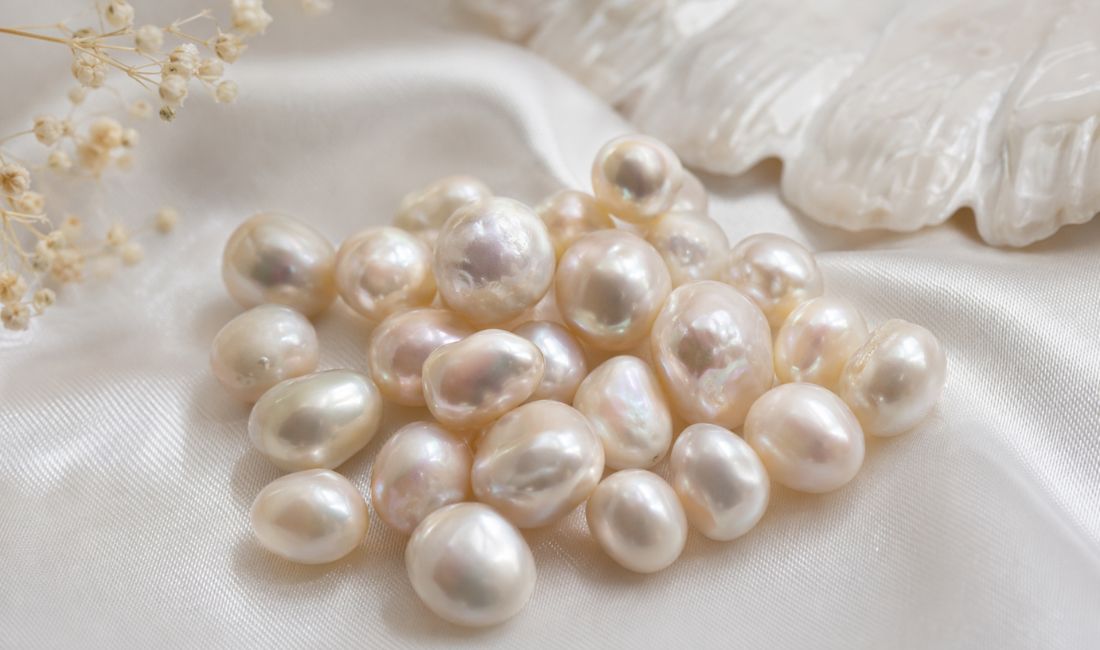
- baroque: free and organic
In 2026, the baroque shape is particularly sought after for its unique character.
Size
Size depends on:
- the duration of cultivation
- the health of the mollusk
Freshwater pearls generally reach between 5 mm and 12 mm, with some exceeding this in extended cultivation.
Color
Natural colors include:
- white
- pink
- peach
- lavender
These shades originate from:
- the mollusk's composition
- the environment
Colors that are too uniform may indicate treatment.
Orient
Orient refers to the iridescent reflections visible on the surface.
It results from the interference of light between the nacre layers, and appears primarily when these are sufficiently thick and regular.
Nacre structure: an often underestimated key element
The quality of a pearl depends directly on its internal structure.
Thick and well-organized nacre:
- enhances luster
- increases resistance
- prolongs lifespan
Unlike Akoya pearls, freshwater pearls are generally composed mostly of nacre, which contributes to their good resistance and durability over time.
2026 Jewelry Trends: how freshwater pearls are reinventing themselves
The return of the baroque
Appreciation of natural irregularity.
Mastered asymmetry
Less conventional compositions.
Pearled minimalism
A single pearl as a strong signature.
The contemporary vintage trend
At a time when digital media imposes a fast-paced rhythm and fleeting trends, jewelry with antique charm captivates through its depth and authenticity. Its patina, shaped by time, tells a story that new items cannot imitate. This revisited aesthetic of the past embodies a new way of consuming: more mindful, more sustainable, and resolutely oriented toward pieces with high emotional value.
DID YOU KNOW?
Some pearl farms in China are experimenting with controlled-environment breeding systems, notably featuring more precise management of water temperature and quality. These techniques aim to stabilize production and improve pearl consistency, but they remain limited and do not replace traditional methods in natural environments.
Caring for your pearls
- Hydration: Pearls are composed of water and proteins. If you do not wear them, they dry out. Wear them often; they will hydrate through contact with your skin.
- Cleaning: A simple soft, damp cloth is sufficient. No chemical products.
Maintenance: a gemological approach
Pearls are sensitive to chemical and environmental variations.
Main risks
- acidity (cosmetics, perfume)
- dehydration
- abrasion
Caring for your pearls
- Hydration: Pearls are composed of water and proteins. If you do not wear them, they dry out. Wear them often; they will hydrate through contact with your skin.
- Cleaning: A simple soft, damp cloth is sufficient. No chemical products.
Pearls are composed of water and proteins. If you do not wear them, they dry out. Wear them often; they will hydrate through contact with your skin.
Mistakes to avoid when buying freshwater pearls
Choosing freshwater pearls requires focusing on their actual quality, not just their appearance.
Focusing solely on size
A larger pearl is not necessarily more beautiful. Luster remains the essential criterion: it determines brilliance and depth.
Looking for a color that is too perfect
Natural pearls feature slight variations. A uniform color may indicate treatment.
Neglecting the surface
Minor irregularities are normal, but visible flaws diminish quality.
Ignoring the nacre
The structure of the nacre directly influences brilliance and durability.
Failing to verify information
Organizations like the Gemological Institute of America can certify certain high-end pearls, but the vendor's transparency remains essential.
Observing only under artificial light
Natural light allows for a proper evaluation of luster and nuances.
At the crossroads of tradition and innovation, freshwater pearls stand out today as major gems in the world of contemporary jewelry. Long perceived as an accessible alternative, they now reveal an aesthetic richness and gemological complexity that captivate purists and fashion lovers alike.
Their diversity of shapes, the quality of their nacre, and their stylistic evolution make them unique pieces, capable of adapting to all expressions of jewelry, from the most classic to the most daring.
More than a simple ornament, the freshwater pearl embodies a new vision of luxury: freer, more mindful, and deeply anchored in its era.
Related tags
Comments
Comments are coming soon.