Natural Stone Pregnancy Bola: A Jewel Accompanying Every Stage of Maternity
The bola is no longer merely acoustic: it is a personalized companion, handcrafted to accompany motherhood with a chosen natural stone.
Aurelia
30 July 2026
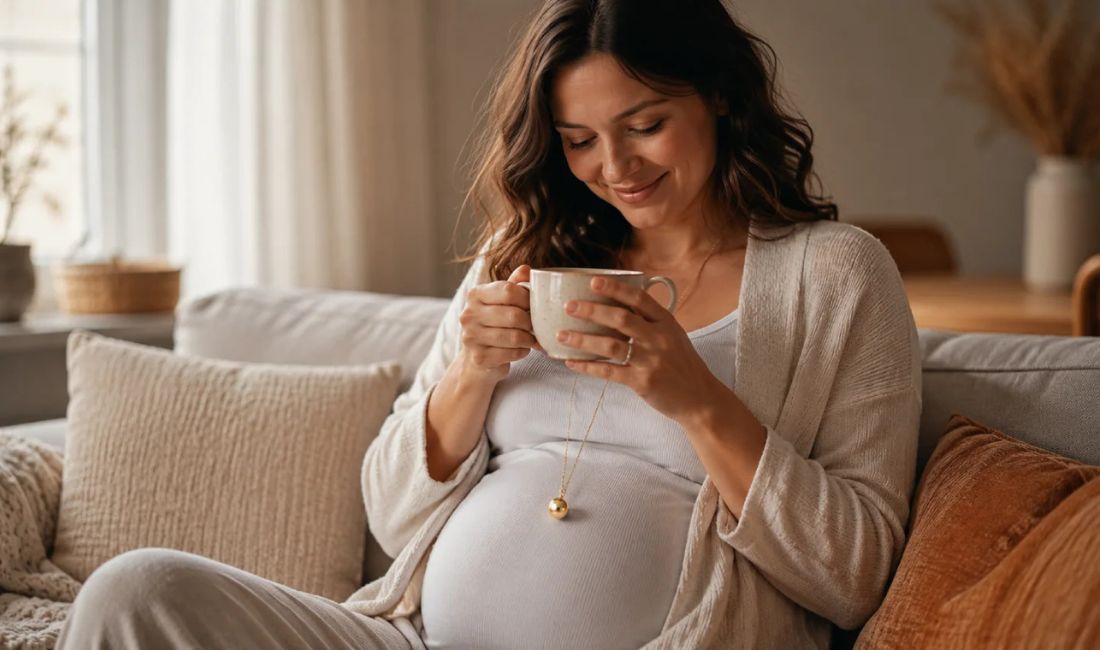
It slips discreetly beneath loose sweaters during the first trimester, then proudly rests upon the gentle curves of the final months. The pregnancy bola is no longer a simple fashion accessory: worn with a natural stone, it becomes a true companion along the way, designed to accompany every stage of pregnancy.
A closer look at a piece of jewelry that increasingly captivates expectant mothers, and the reasons prompting so many women to choose a hand-crafted rather than mass-produced piece.
The Pregnancy Bola, a Jewel Spanning Generations
Originating from Indonesia, the bola is traditionally worn from the fourth month of pregnancy onwards, precisely when the baby's hearing begins to develop. Its pendant, generally crafted from silver or silver-plate, encases a small chime ball that gently tinkles with each movement of the mother-to-be.
This familiar sound, perceived in utero, becomes a comforting post-birth landmark for the newborn, much like a lullaby heard a thousand times before.
Yet if the bola enjoys such success today, it is also because it is no longer confined to its acoustic function. An increasing number of designers pair it with a natural stone, transforming this traditional jewelry piece into an object that is both aesthetically refined and deeply meaningful.
Why Pairing a Natural Stone Completely Transforms the Bola Experience
Adding a natural stone to a pregnancy bola is not merely a decorative choice. It is a way to personalize a unique moment in a woman's life, infusing it with a more intimate dimension.
A Soothing Ritual, Trimester After Trimester
Many expectant mothers recount the exact same experience: wearing a natural stone bola by Ma Peste Adorée becomes, over time, an almost meditative gesture. One touches it with fingertips while awaiting ultrasound results, slides it between palms before drifting off to sleep, and views it differently depending on the day's mood.
In lithotherapy, certain stones are associated with virtues that naturally accompany the three major phases of pregnancy.
During the first trimester, frequently marked by fatigue and uncertainties, moonstone is frequently chosen for its symbolic connection to feminine cycles and maternity.
In the second trimester, a period when the body settles into itself and energy returns, aventurine or rose quartz are readily favored for their gentleness and association with emotional soothing.
Finally, as the due date approaches, labradorite or tiger's eye are often sought after for their protective symbolism, at a time when childbirth draws near and questions multiply.
Naturally, this is not an exact science, but rather a symbolic accompaniment that many women choose to integrate into their pregnancy, much like a tracking journal or a dedicated playlist for baby.
A Jewel That Preserves a Trace, Long After Childbirth
Unlike other pregnancy jewelry, the natural stone bola does not stop at birth. Numerous mothers continue wearing it as a necklace post-delivery, or transform it into a baby rattle once the cord is removed.
The stone itself remains a guiding thread between pregnancy and the child's early months of life—an object that certain families even pass down from one pregnancy to another, or from mother to daughter.
Why Prioritize Artisan and Bespoke Creation
This is precisely where the choice of the designer makes all the difference. A mass-produced bola will never tell the same story as a piece of jewelry conceived specifically for a woman, her pregnancy, and her desires.
This is the philosophy of Ma Peste Adorée, artisan jeweler for fifteen years, who has made bespoke creation her signature. Each bola is crafted upon order, piece by piece, according to the stones chosen by the expectant mother, the color of the cord or chain, and sometimes even a personalized engraving.
No standardized collections, no mass production: every piece of jewelry is unique, envisioned for one single person at a precise moment in her life.
This artisanal approach changes a great deal. It allows the expectant mother to choose a stone that genuinely speaks to her, rather than settling for an imposed model.
It also guarantees manual craftsmanship, far removed from production lines, with meticulous attention paid to every detail: the quality of the silver, the setting of the stones, the sturdiness of the clasp—all essential elements for a piece of jewelry destined to be worn daily for several months.
How to Properly Choose and Care for Your Natural Stone Bola
To fully enjoy your bola, a few simple precautions suffice. It is advised to remove it before showering, swimming, or engaging in intense sports activities, in order to preserve both the metal and the stone. Regular cleaning with a soft, dry cloth also helps maintain its luster over time.
Regarding selection, it is preferable to favor a natural stone of modest size, which remains discreet and harmoniously matches the pendant, rather than an imposing stone that would weigh down the jewelry.
Above all, the essential thing remains choosing a stone that resonates with oneself, without relying solely on a prefabricated list of virtues: intuition and love at first sight are often the most reliable guides.
Wearing a natural stone pregnancy bola is ultimately much more than following a trend. It is treating oneself to an object that gently accompanies one of the most intense moments in a woman's life, and that will continue telling a story long after birth.
Related tags
Comments
Comments are coming soon.