✦ Key takeaways
- The most reliable method is to borrow a ring worn on the same finger and hand, then have it measured by a jeweler on a triboulet.
- In France, a ring's size is its inner circumference in millimeters: inner diameter multiplied by 3.14.
- Without measurement, Histoire d'Or places the female ring finger between 50 and 54 and the male ring finger around 60; between two sizes, take the larger one.
- Cartier, Chanel, and Van Cleef & Arpels offer the first resizing for free under conditions; Histoire d'Or charges it from €24.
- A engraved or personalized ring may be exempt from the 14-day withdrawal right: engrave after trying it on.
Contents 12 sections
- What you need to know before you search
- 1. Borrow a ring and have it measured
- 2. Measure the ring yourself, with a ruler
- 3. Place the ring on a printed ring sizer
- 4. Trace the circle on a sheet
- 5. Use an accomplice
- 6. Take advantage of a shop window or a fitting
- 7. Measure the finger with a string: the last resort method
- If you can't find it: what size to aim for?
- Exchange and resizing: what six houses offer
- Special cases
- Mistakes to avoid
To find out someone's ring size without asking, borrow a ring they wear on the right finger and have it measured by a jeweler, or place it on a printed ring sizer. Otherwise, aim for 50 to 54 for a woman, 60 for a man, and buy where exchange or resizing is free.
What you need to know before you search
In France, a ring's size does not correspond to its diameter but to its inner circumference, in millimeters. Histoire d'Or reminds us in its guide: a size 52 ring measures 52 mm around. Two neighboring sizes differ by only about 0.3 mm in diameter, which explains why an "eyeball" estimate is easily mistaken.
The same guide points out two pitfalls. Finger circumference varies throughout the day (fingers are more swollen in the evening than when you wake up), and there is generally a one to two size difference between the fingers of both hands, the writing hand being the larger. A borrowed ring is therefore only reliable if it is worn on the finger and hand that will receive the gift.
1. Borrow a ring and have it measured
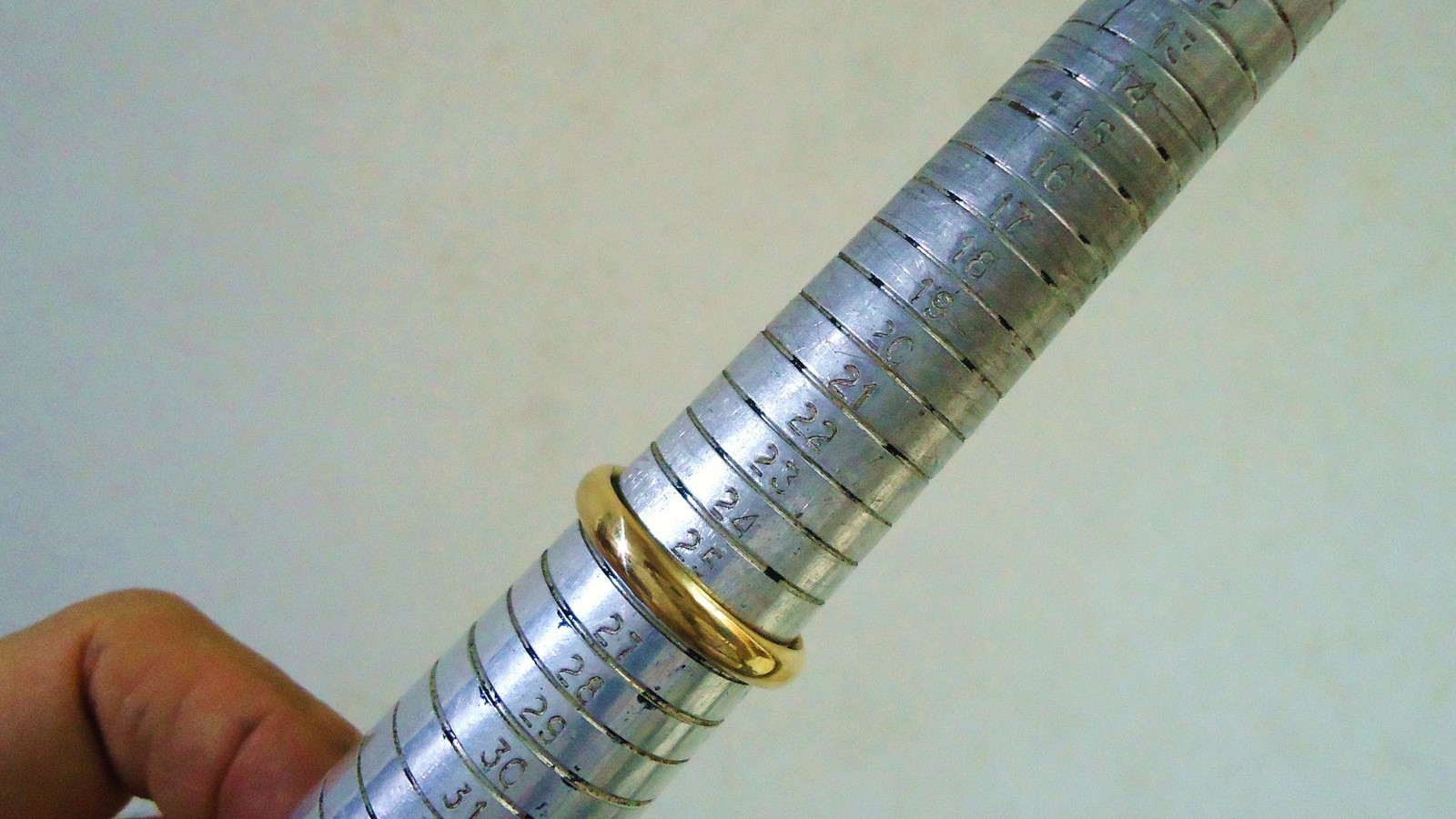
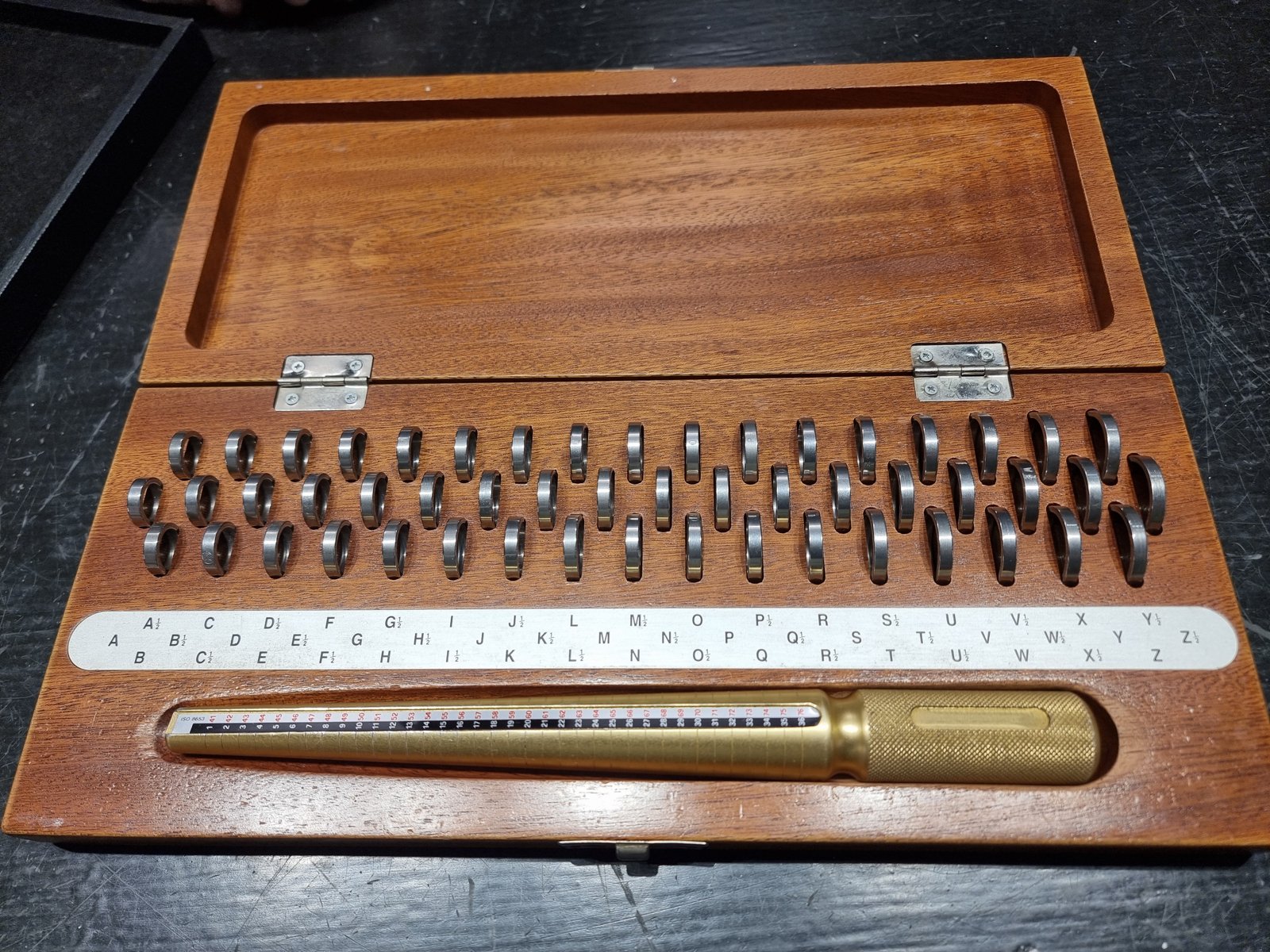
This is the most reliable method. Take a ring that the person wears often, on the target finger (the left ring finger for an engagement ring in France), and bring it to a jeweler. They slide it onto a triboulet, a graduated rod that gives the exact size of the ring. Histoire d'Or clarifies that only a professional has the tools to accurately measure an existing piece of jewelry, and that measuring a finger with a ring sizer is often a free service.
Preferably choose a thin, round ring, similar to the one you plan to give: a very wide band is worn differently from a thin band. Return it the same day, to its place.
2. Measure the ring yourself, with a ruler
Without visiting a jeweler, place the ring flat on a graduated ruler and read the inner diameter, from one inner edge to the other, without counting the thickness of the metal. Multiply this diameter by 3.14: you get the circumference, so the French size. Histoire d'Or considers this measurement "subject to errors": a tenth of a millimeter misread is enough to change the size. It mainly serves to verify an estimate.
Chart: from inner diameter to French size
The values for sizes 52, 54, and 55 are from Ocarat's correspondence chart; the others are calculated by Orzyla using the same formula (circumference divided by 3.14), rounded to the nearest tenth.
| Measured inner diameter | French size (circumference in mm) |
|---|---|
| 15.3 mm | 48 |
| 15.9 mm | 50 |
| 16.6 mm | 52 |
| 17.2 mm | 54 |
| 17.5 mm | 55 |
| 17.8 mm | 56 |
| 18.5 mm | 58 |
| 19.1 mm | 60 |
| 19.7 mm | 62 |
| 20.4 mm | 64 |
[tool:ring-size]
3. Place the ring on a printed ring sizer
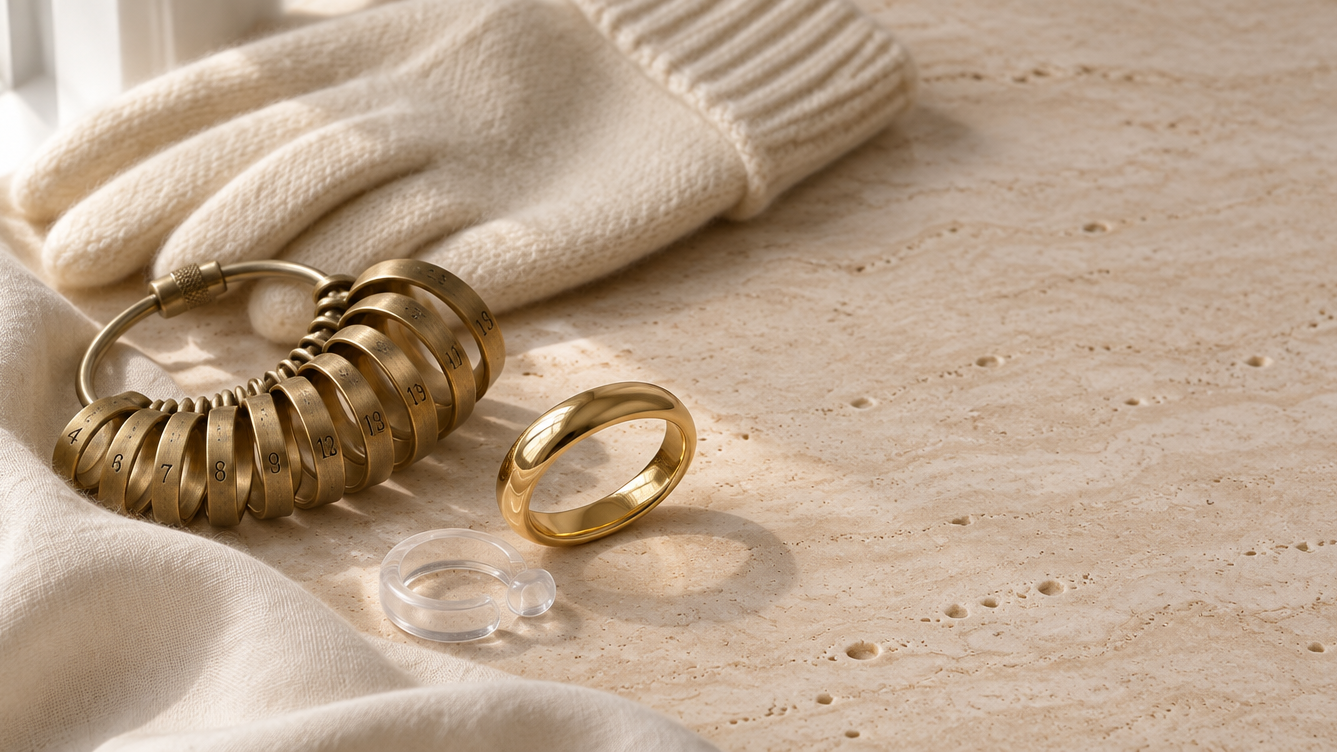
A paper ring sizer has numbered circles. Print it at 100%, without "fit to page", and check the scale with the control ruler provided on the sheet. Then place the borrowed ring on the circles: Histoire d'Or indicates that the correct size is the one where the circle line appears just inside the ring, since it is the inner circumference that matters. Our ring size guide details this method.
4. Trace the circle on a sheet
If the ring cannot leave the house, place it on a white sheet and trace its inner outline with a well-sharpened pencil, holding the tip against the metal. Then measure the diameter of the circle with a ruler, in several directions, and keep the average value. Report it in the chart above. The method takes a minute and leaves no trace.
5. Use an accomplice
A friend, sister, or family member can obtain the information without raising suspicion: suggest trying on rings together while shopping, or ask the size under the pretense of a purchase for yourself. The popular guides cited in the sources recommend this option, and it has an advantage: the accomplice often knows whether the person prefers snug rings or ones a little loose.
6. Take advantage of a shop window or a fitting
A walk past a jewelry store easily turns into a try-on. Let the person try on a few rings "to see", then discreetly ask the salesperson for the size once they have moved away. A jeweler is used to it and will willingly note down the size tried on.
7. Measure the finger with a string: the last resort method
Some suggest wrapping a thread around the finger of a sleeping person. This is the least reliable method: the thread stretches, doesn't tighten well, and a finger at rest at night is not the same size as late in the day. If you use it, measure the middle phalanx without tightening, note the length in millimeters, and round up to the next size for safety.
If you can't find it: what size to aim for?
Histoire d'Or places the most common female ring finger between 50 and 54, and the male ring finger around 60, while reminding that bone structure matters a lot. In case of doubt between two sizes, the company advises taking the larger one, more comfortable in all circumstances. A slightly large ring can be corrected without resizing with an adjuster, as explained in our article on a ring that's too large; a ring that's too tight, however, cannot be worn, and should never be forced (see the steps in case of a ring stuck on finger).
Exchange and resizing: what six houses offer
The real safety net is the store's policy. Here are the conditions noted on November 29, 2026, on the official French pages of the brands cited in the sources. They may change: check them before purchase and keep your receipt.
| House | Exchange or return | Resizing |
|---|---|---|
| Histoire d'Or | Satisfaction guaranteed or refunded within 60 days (site mention) | From €24, free estimate, approximately 1 week |
| Agatha | Return within 30 days of receipt; exchange in the brand's own stores | In-store adjustment depending on model |
| Pandora | Exchange within 30 days, new and unworn jewelry | Not indicated |
| Cartier | According to the online store's policy | First intervention free of charge (excluding pavé rings), then €245, minimum 2 weeks |
| Chanel | According to the store's policy | Free the first time within 6 months, then €195 |
| Van Cleef & Arpels | According to the store's policy | Free within 12 months of purchase, then €240 including tax |
Details are available on the Histoire d'Or resizing page and in the Agatha returns FAQ (affiliate links: Orzyla may receive a commission, at no extra cost to you).
For a ring purchased online in France, the law also gives you a 14-day withdrawal right, as recalled by Service-Public.fr. In-store, however, nothing requires the merchant to exchange or refund jewelry that has no defect: exchange is a commercial gesture there, as the DGCCRF clarifies. Hence the importance of requesting conditions in writing at the time of payment, and of checking each retailer's holiday order deadlines.
Special cases
The engagement ring
This is the case where the surprise matters most. If the size remains uncertain, some choose to make the proposal with the ring, then have it adjusted together. At Cartier, Chanel, or Van Cleef & Arpels, the first free resizing makes this choice cost-free, under the conditions indicated above.
The pavé ring or ring with a particular design
Cartier excludes pavé rings from its free resizing, and Chanel specifies that some rings cannot be adjusted because of their design. For these models, the size must be right from purchase: favor the borrowed ring measured by a jeweler.
The engraved or personalized ring
A piece made according to your specifications or clearly personalized is among the exceptions to the withdrawal right listed by Service-Public.fr. An engraving ordered before you're sure of the size can thus deprive you of a return. Engrave after trying it on.
A ring for another finger
The size of a ring finger is not the same as for the index or little finger. If you're giving a ring to wear elsewhere, borrow a ring worn on that specific finger. Our article on the meaning of rings according to the finger helps you choose the right one.
Mistakes to avoid
- Borrowing a ring worn on the other hand. The difference can be one to two sizes.
- Measuring the outer diameter. Only the inside of the ring matters.
- Printing the ring sizer at the wrong scale. Always check the control ruler before measuring.
- Choosing the smallest size "so it doesn't slip". A ring that's too tight won't go over the knuckle; in case of doubt, take the larger size.
- Throwing away the receipt or box. Exchanges often require new jewelry in its original packaging.
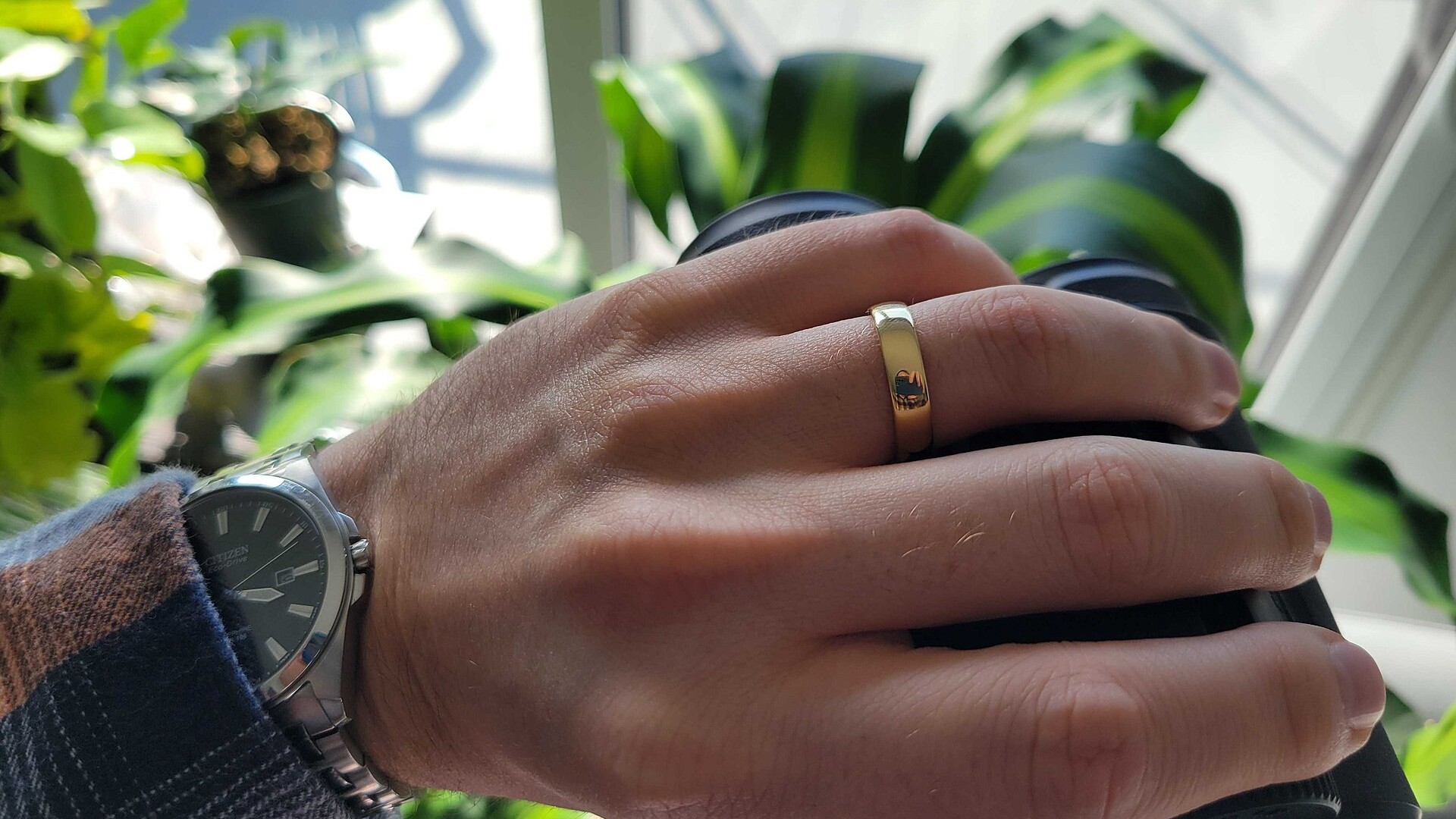
Cover photo: a jeweler measures a gold wedding band on a triboulet. Photo: Mauro Cateb, CC BY-SA 3.0, via Wikimedia Commons.
Frequently asked questions
How do you find out your girlfriend's ring size without her knowing? +
Borrow a ring she wears on the target finger and have it measured by a jeweler, or place it on a printed ring sizer at scale. You can also involve a girlfriend accomplice or trace the inner circle of the ring on a sheet.
What is the average ring size for a woman? +
According to Histoire d'Or, a woman's ring finger most often falls between 50 and 54, and a man's around 60. Bone structure varies these figures: it's only a fallback if no measurement is possible.
How do you measure a ring with a ruler? +
Place the ring flat, read the inner diameter in millimeters, without counting the thickness of the metal, then multiply it by 3.14. The result is the French size: 17.2 mm in diameter gives a size 54.
Should you take the size up in case of doubt? +
Yes. Histoire d'Or advises choosing the larger of the two sizes, more comfortable in all circumstances. A slightly large ring can be corrected with an adjuster, while a ring that's too tight won't go over the knuckle.
Can you exchange a ring given as a gift that's not the right size? +
Often, depending on the store: Pandora accepts exchange within 30 days of new, unworn jewelry, Agatha accepts returns within 30 days. In-store, exchange remains a commercial gesture; online, the 14-day withdrawal right applies.
Sources
- Comment connaître sa taille de bague ?
- Mise à la taille d'une bague (service atelier)
- Bagues et baguier à imprimer, tableau des correspondances de taille
- FAQ Agatha : retours, échanges et ajustements
- Comment faire un échange ou un retour ?
- Joaillerie : ajuster son bijou Cartier
- Tarification des services joaillerie
- Les services de personnalisation : mise à taille
- Mise à taille de bague
- Achat à distance : droit de rétractation du consommateur
- Soldes : droit des consommateurs et obligations des commerçants
- Comment trouver discrètement la taille de bague de son partenaire
- Astuces pour connaître la taille de bague sans baguier
- Measuring a wedding ring (Mauro Cateb, CC BY-SA 3.0)
- A ring sizing set (Richard Avery, CC BY-SA 4.0)