✦ Key takeaways
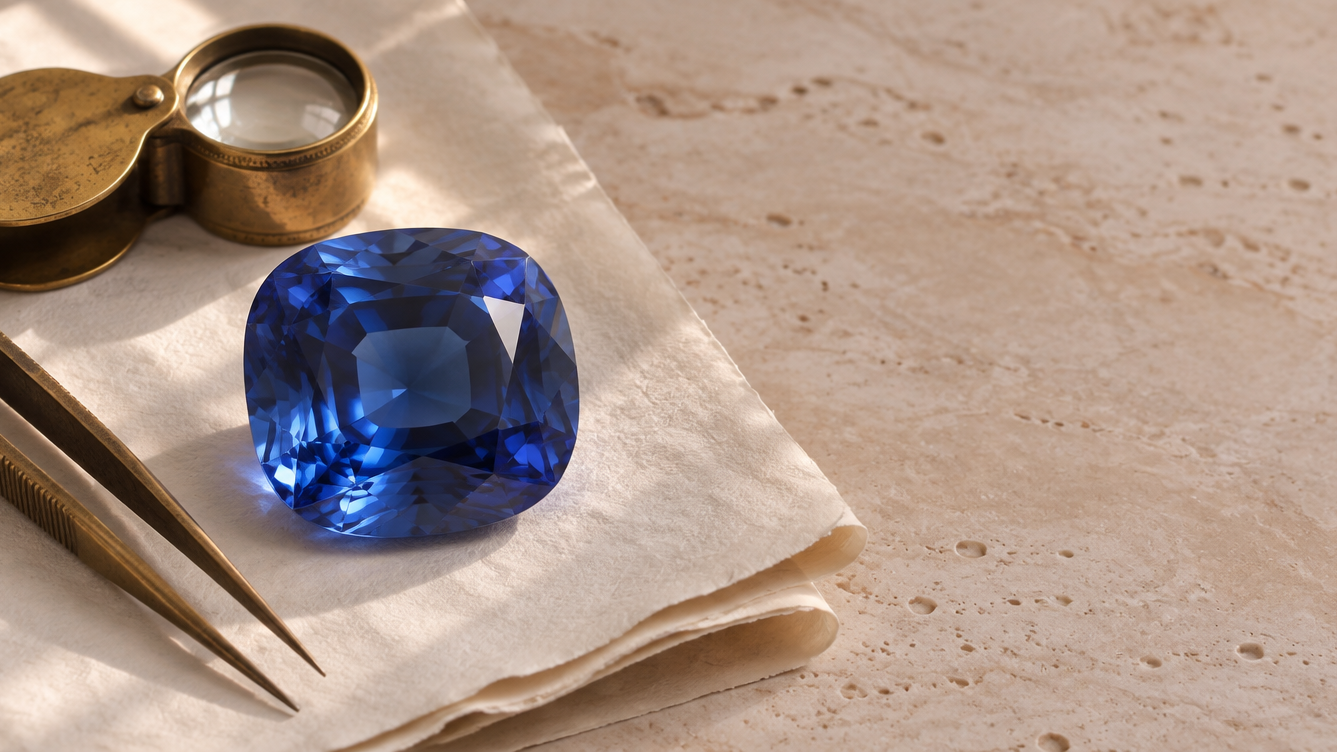
- The Romanov sapphire, 197.80 carats of unheated Ceylon set by Cartier in a bracelet, sold for 4,122,000 Swiss francs (4.9 million dollars) at Sotheby's Geneva on November 11, 2026.
- The price reached 2.4 times the high estimate of 1.7 million francs: Russian imperial provenance and documented history drove up bidding.
- Per carat, the Romanov sapphire (approximately 24,800 dollars) remains less expensive than two unheated sapphires sold by Christie's the same week, including a Kashmir sapphire at approximately 75,900 dollars per carat.
- The stone passed through Maria Feodorovna, Soviet sales, Cartier, soprano Ganna Walska in 1927, then back to Cartier, which set it in 2015.
- For any sapphire, three elements affect value: absence of heating, origin confirmed by a recognized laboratory, and documents tracing its history.
Contents 5 sections
The Romanov sapphire, a 197.80-carat unheated Ceylon sapphire linked to Empress Maria Feodorovna and set by Cartier in a diamond bracelet, was hammered down for 4,122,000 Swiss francs (4.9 million dollars) at Sotheby's in Geneva on November 11, 2026. That is 2.4 times its high estimate.
What happened in Geneva on November 11, 2026
The bracelet was lot 1080 of Sotheby's Royal & Noble Jewels sale. The house estimated it between 850,000 and 1.7 million Swiss francs, according to the lot description on Sotheby's website. It sold for 4.12 million francs, including buyer's premium, to a private collector who was not named, according to National Jeweler.
The entire sale was declared a "white glove" sale: all lots found buyers. It totaled 15.3 million francs, or 16.5 million euros, according to a Belga wire report republished by DH. The Romanov sapphire alone represents more than a quarter of this total.
Where does the Romanov sapphire come from?
The stone is a cushion-cut sapphire extracted in Ceylon, present-day Sri Lanka. Reports from Swiss laboratories SSEF and Gübelin, attached to the lot, conclude that there is no indication of heating, according to Sotheby's. For a sapphire of this size, that is the first line a buyer reads.
A stone from the Russian court
Its name comes from the Russian imperial family. Sotheby's attributes the stone to Maria Feodorovna, born Dagmar of Denmark, wife of Tsar Alexander III and mother of Nicholas II, who is said to have worn it at a court ball. Sale reports do not agree on the date of this ball, and the auction house does not specify how the stone entered the imperial collections.
From Cartier to Ganna Walska
After the revolution, the Soviet regime dispersed part of the imperial jewels. The sapphire came to Cartier, which sold it in 1927 to soprano Ganna Walska, mounted as a pendant on a long sautoir, according to the lot description. Walska would have it reset several times.
In 1971, she auctioned her jewelry in New York to finance Lotusland, her botanical garden in Montecito, California, Sotheby's recalls in its profile of the collector. The sapphire changed hands several times before returning to Cartier.
The Cartier bracelet from 2015
In 2015, Cartier mounted it on the bracelet sold in Geneva: a geometric architecture of brilliant-cut diamonds, with an interchangeable center in engraved rock crystal that allows wearing the jewelry without the sapphire. The house still presents this "Romanov bracelet" among its exceptional stones.
Price per carat: provenance isn't everything
Calculated by weight, the Romanov sapphire sold for 20,839 francs per carat. That is much more than expected: the high estimate corresponded to 8,595 francs per carat. But compared with other major sapphires sold in Geneva the same week, it is not the most expensive per carat. The table below brings together results published by the auction houses and specialized press.
| Stone | Weight | Origin | Sale | Total Price | Price per Carat |
|---|---|---|---|---|---|
| Romanov sapphire, Cartier bracelet | 197.80 ct | Ceylon, unheated | Sotheby's, November 11, 2026 | 4.9 M$ (4.12 M CHF) | approximately 24,800 $ |
| Sapphire mounted as pendant brooch | 54.76 ct | Ceylon, unheated | Christie's, November 10, 2026 | 1.9 M$ | approximately 34,700 $ |
| Sapphire mounted in platinum ring | 23.72 ct | Kashmir, unheated | Christie's, November 10, 2026 | 1.8 M$ | approximately 75,900 $ |
Sources: National Jeweler for the Romanov sapphire, National Jeweler for the two Christie's lots. Christie's prices are rounded by the source, hence the approximate per-carat amounts.
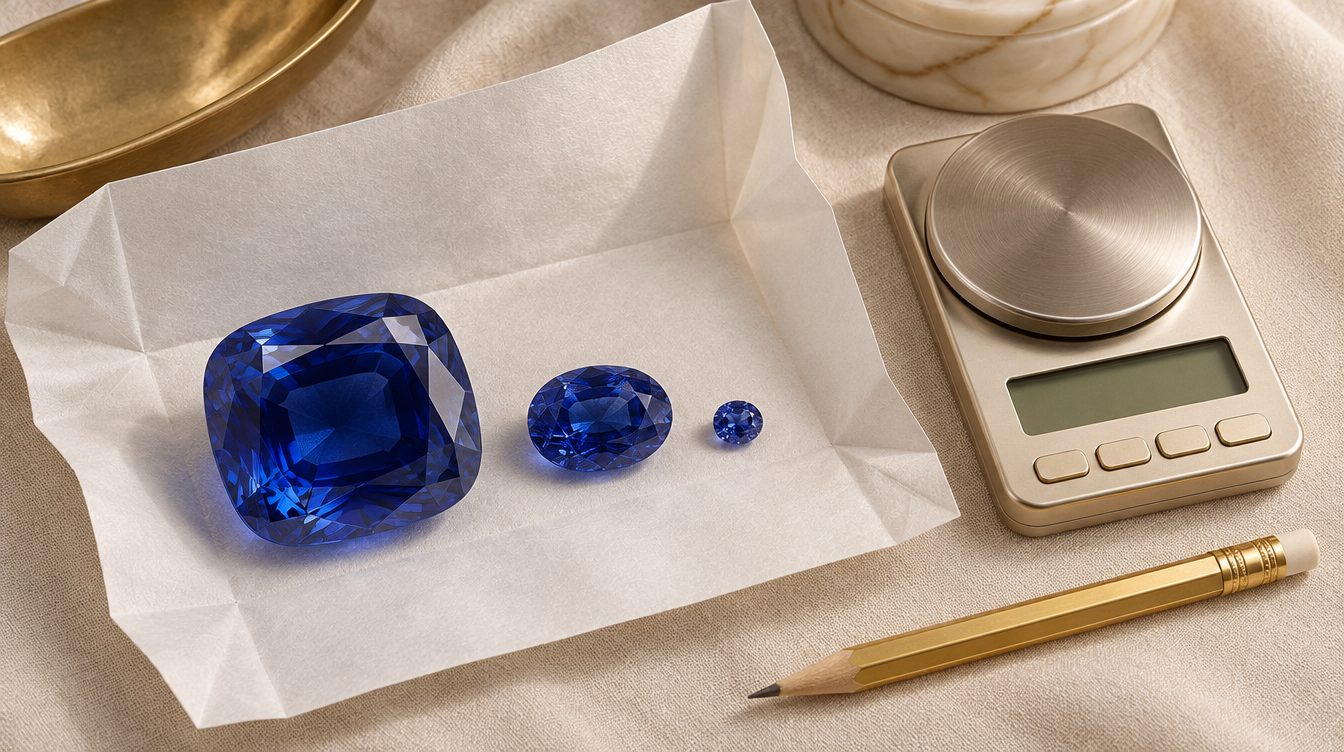
Two market rules explain this ranking. First, the per-carat price of a gemstone often decreases for very heavy stones, as few buyers can wear them or finance them. Second, origin matters: a Kashmir sapphire, from a deposit long exhausted, commands a much higher price than a Ceylon sapphire of comparable quality.
Our take: imperial provenance added approximately 2.4 million francs above the high estimate, but it did not override these two rules. Bidders paid for history, not a gemological record.
Why the history of a jewel drives up bidding
This result contrasts with the previous day's outcome. At Christie's, the Bulgari Pink diamond, retained by an anonymous European noble family, sold within its estimate, without exceeding it.
The difference lies in what auction houses call provenance. A previous owner's name, a royal family, a jeweler's signature, and a documented history reassure the buyer about authenticity and future resale. They also add a collecting dimension: the collector is not just buying 197.80 carats of blue corundum, they are buying a piece that can be cited in catalogs.
The Romanov sapphire combines these guarantees: a link to the Romanovs, a famous collector, two passages through Cartier, recent laboratory reports. It is the combination, more than the stone alone, that explains a price multiplied by 2.4.
What the Romanov sapphire teaches the sapphire buyer
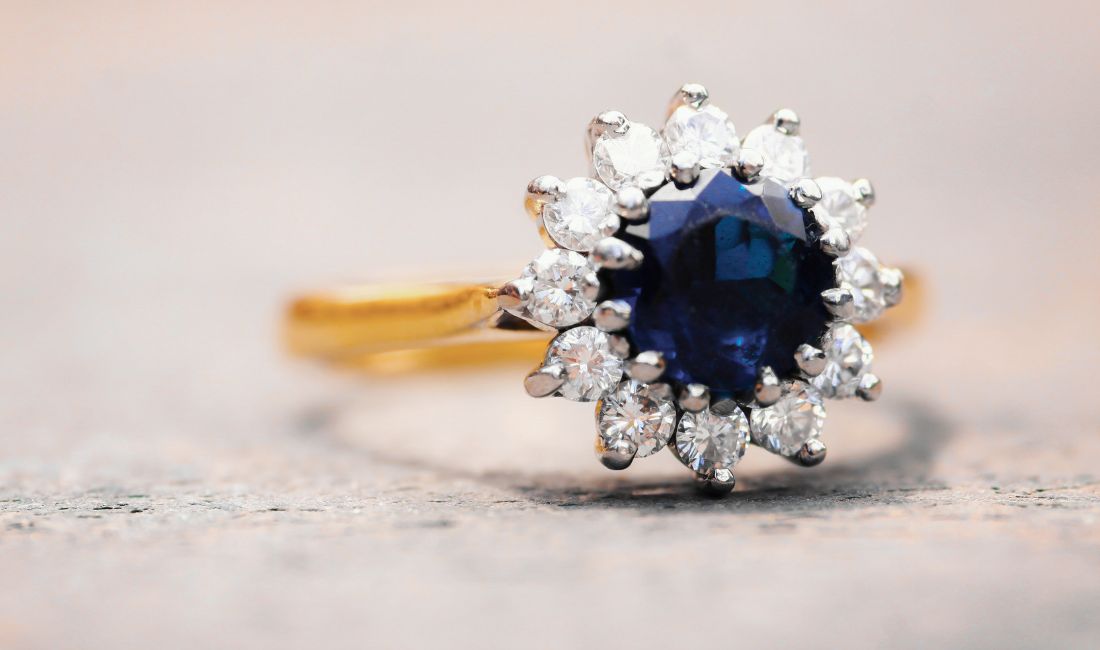
You will probably not buy a 200-carat sapphire. But the criteria that set this price apply to an sapphire engagement ring or an heirloom jewel.
- Treatment: most commercial sapphires are heated to improve their color. The notation "no indication of heating" on a recognized laboratory report significantly increases value.
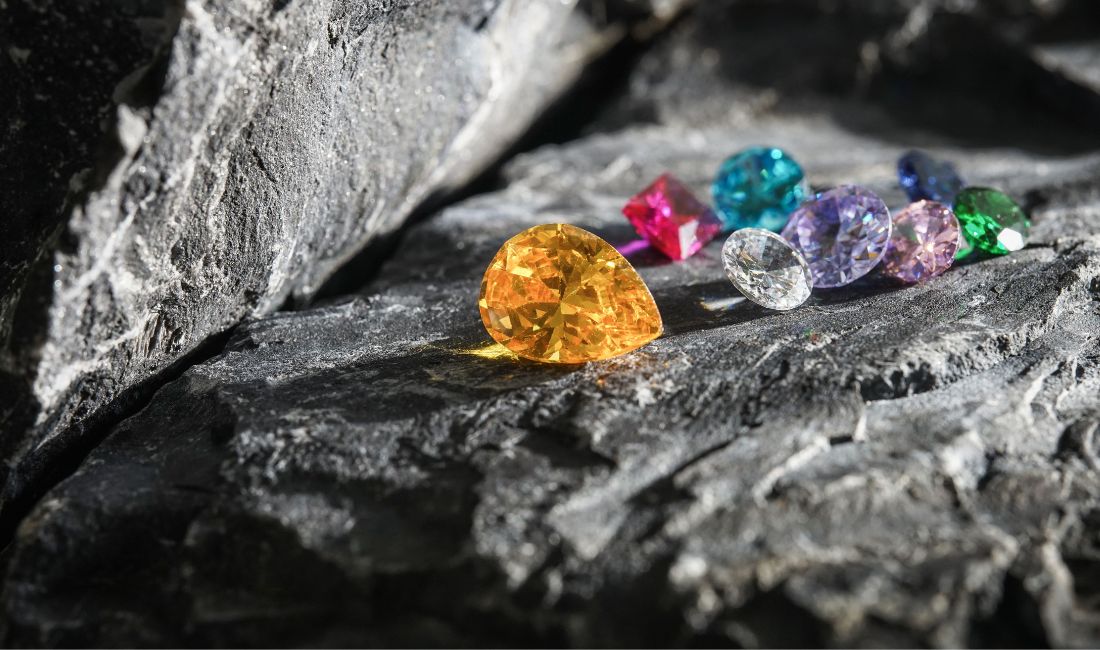
- Origin: Kashmir, Myanmar, Ceylon, Madagascar. It appears on reports from major laboratories and affects the per-carat price, as the table shows.
- Documentation: invoices, boxes, old photos, and certificates document a history. Keep them with the jewelry.
If you inherit an antique sapphire, have a laboratory report prepared before any sale or insurance: our guide to assessing the value of your jewelry before reselling it details the process. And for the significance attached to this stone, see our article on the meaning of the sapphire ring.
Frequently asked questions
How much did the Romanov sapphire sell for? +
The Romanov sapphire was hammered down for 4,122,000 Swiss francs, or approximately 4.9 million dollars including buyer's premium, on November 11, 2026 at Sotheby's in Geneva. It was estimated between 850,000 and 1.7 million francs. The price represents 2.4 times the high estimate and approximately 20,839 francs per carat.
Who bought the Romanov sapphire? +
The buyer is a private collector whose name was not disclosed, as is customary at Sotheby's. The seller was also not named. The lot was presented mounted on a diamond bracelet created by Cartier in 2015.
Why is it called the Romanov sapphire? +
Sotheby's attributes the stone to Empress Maria Feodorovna, wife of Tsar Alexander III of the Romanov dynasty. After the revolution, Soviet sales took it out of Russia. Cartier sold it in 1927 to soprano Ganna Walska before repurchasing it and resetting it as a bracelet in 2015.
What is an unheated sapphire? +
It is a sapphire whose color has not been improved by heat treatment, a common practice in commerce. Only a laboratory can establish this. For the Romanov sapphire, Swiss laboratories SSEF and Gübelin conclude there is no indication of heating, which significantly increases a stone's value.
What is a white glove sale? +
A "white glove" sale is an auction where all lots offered find a buyer. This was the case for Sotheby's Royal & Noble Jewels sale in Geneva on November 11, 2026, which totaled 15.3 million Swiss francs.
Sources
- Sapphire, Rock Crystal and Diamond Bracelet, Cartier (lot 1080, Royal & Noble Jewels)
- Historic 'Romanov Sapphire' Achieves $4.9M at Sotheby's
- Un saphir Romanov surpasse les estimations lors de sa vente à Genève (Belga)
- Romanov bracelet, 2015
- The Remarkable Jewelry Collection of Madame Ganna Walska
- 24-Carat 'Bulgari Pink' Diamond Sells for $14.8M
- 197-Carat 'Romanov Sapphire' Heads to Sotheby's Geneva