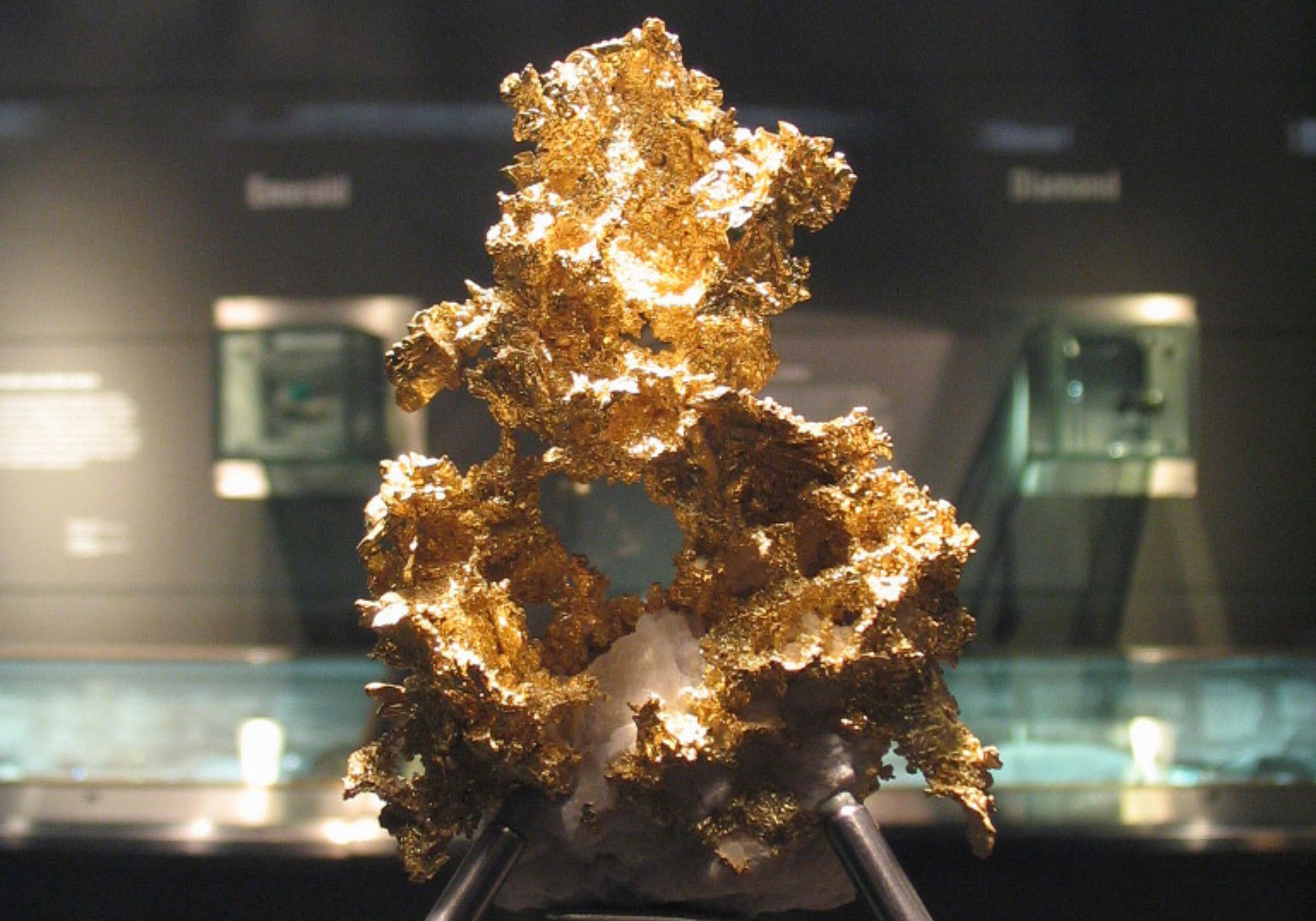
Where does gold come from? A fascinating cosmic origin
Why is gold so rare? The rarity of gold is explained by its extraordinary origin and its limited presence on Earth.
Aurelia
11 February 2025
"Every gold piece of jewelry we wear is a fragment of the universe"
Gold is much more than just a precious metal used in fine jewelry and investment. Its history begins long before the formation of the Earth, in the immensity of space, during astrophysical phenomena of unimaginable power. This rare treasure, coveted for millennia, stems from a cosmic process that makes it a material as unique as it is precious.
A metal born from the stars
Unlike other elements present on Earth, gold did not form naturally on our planet. Its origin dates back several billion years, well before the birth of the solar system. Scientists agree that gold comes from the fusion of particles during extreme cosmic events such as neutron star collisions or supernova explosions. These phenomena release colossal energy that leads to the formation of heavy elements, including gold, which is then projected into space in the form of stardust.

Gold and the formation of the Earth
After being dispersed across the universe, gold integrated into the asteroids and meteorites that bombarded the young Earth about 4 billion years ago. This process allowed the yellow metal to infiltrate deep into the Earth's core, making its extraction particularly complex. However, a portion of the gold remained close to the Earth's crust, trapped in deposits exploitable by humans. It is this tiny fraction that shaped the history of civilizations and fueled the fascination for this precious metal.
Why is gold so rare?
The rarity of gold is explained by its extraordinary origin and its limited presence on Earth. Unlike other metals that can be produced by terrestrial chemical reactions, gold is a finite element whose quantity on our planet is stable. This rarity contributes to its value and its privileged status in the world of fine jewelry and investment.
Refined gold: an exceptional process
Once extracted, raw gold must undergo a complex refining process to achieve optimal purity. This process relies on several techniques, including melting and electrolysis, to remove impurities and obtain 99.99% pure gold. This refined metal is then used in haute joaillerie, where it is transformed into exceptional pieces by the greatest luxury houses such as Cartier, Boucheron, and Van Cleef & Arpels.
Gold in haute joaillerie: between luxury and heritage
Since antiquity, gold has been at the center of exceptional jewelry. Its timeless brilliance, malleability, and resistance to oxidation make it a prized material for master jewelers. Today, it comes in various forms – yellow gold, white gold, rose gold – and is enhanced by sophisticated setting techniques. The collections of the great houses blend tradition and innovation to create jewelry that transcends eras.
Major gold-producing regions in the world
Although gold is of extraterrestrial origin, its extraction is a major industry that fuels the jewelry trade and the global economy. The main producing countries are:
- China, the world's leading producer, with gold-rich mines spread across several provinces.
- Australia, known for its immense gold deposits, particularly in Western Australia.
- Russia, which operates vast mines in Siberia and the Urals.
- South Africa, historically one of the largest gold producers thanks to its famous Witwatersrand mines.
- Canada and the United States, where mines in Alaska and Nevada play a key role in global supply.
Gold, an eternally coveted metal
Gold continues to be a major material, both in the world of luxury and in the technological and financial sectors. Its rarity, cosmic history, and unique brilliance make it a precious metal laden with symbolism and prestige. Each piece of gold jewelry we wear is a fragment of the universe, bearing witness to a history billions of years old, shaped by nature and elevated by human craftsmanship.
But beyond its symbolic value and millennial brilliance, gold is emerging today as a discreet yet essential player in our technological era.
Gold in technology and the future of materials
Gold, beyond its splendor and precious metal status, plays an increasingly crucial role in modern technologies. Its exceptional electrical conductivity, corrosion resistance, and chemical stability make it indispensable in the manufacturing of electronic components — connectors, contacts, microprocessors, and memory modules.
Furthermore, advanced research is exploring the integration of gold into nanotechnology: gold nanoparticles for medical diagnostics, targeted therapies, and photonic devices where gold can be used to manipulate light at the nanoscale.
As sustainability and resource challenges intensify, the industry is also seeking alternatives or more efficient recycling processes to limit the ecological impact of gold mining. Recycled gold — via the recovery of electronic components or antique jewelry — could become a major source in the future.
Comments
Comments are coming soon.