How to Maintain a Pocket Watch to Ensure Its Longevity
Discover how to maintain a pocket watch to ensure its longevity: expert advice, essential tools, and simple steps to preserve its mechanism and elegance.
Aurelia
09 September 2026
How to Maintain a Pocket Watch to Ensure Its Longevity
The pocket watch is much more than a mere accessory; it is a symbol of elegance and a family heirloom. To preserve this horological treasure, it is essential to master the proper maintenance practices.
By adopting simple routines and using suitable products, you can prevent dust accumulation and potential scratches on the dial. Whether your timepiece is water-resistant or not, the guidance provided here will help you avert damage and safeguard the integrity of its mechanism.
Why Maintain Your Pocket Watch?
Maintaining a pocket watch is paramount to preserving its functionality and aesthetics over time. These timepieces, often steeped in history and emotion, require dedicated attention to prevent wear and damage. Regular servicing ensures the precision of the mechanism and averts costly repairs. After purchasing a pocket watch online, it is vital to ensure its proper upkeep to retain its value over the long term, which is especially crucial for luxury models.
Appropriate cleaning and delicate handling are gestures that contribute directly to the longevity of this accessory. Pocket watches, whether inherited or newly acquired, deserve to be cherished and meticulously cared for. Beyond their material worth, they often represent treasured family mementos, heightening the importance of their upkeep.
The Different Types of Pocket Watches and Their Particularities
Pocket watches come in several categories, each featuring unique characteristics that influence their maintenance. A distinction is made primarily between hunter-case watches, which open via a latch mechanism, and open-face or screw-back watches, which require specific tools for safe opening. These differences demand tailored maintenance techniques to avoid damaging the mechanism.
Pocket watches may also be water-resistant or non-water-resistant, affecting the cleaning and care methods required. Water-resistant models demand careful attention during cleaning to prevent water infiltration, whereas non-water-resistant watches must be strictly shielded from moisture. By understanding the specific traits of your watch, you can better manage its care and extend its durability.
Essential Tools and Products for Maintenance
Indispensable Utensils for Effective Cleaning
To ensure the proper maintenance of your pocket watch, having the right utensils on hand is essential. A microfiber cloth is indispensable for cleaning the case and crystal without leaving scratches. A fine, soft-bristled brush allows you to reach difficult areas, dislodging accumulated dust without harming delicate components. Additionally, a soft toothbrush is useful for scrubbing more robust surfaces, while a cotton swab can be used to clean narrow corners. Keeping a can of compressed air is also recommended for removing embedded dirt without direct physical contact.
Recommended Products: Selection and Usage
The choice of cleaning products plays a key role in preserving your watch. For cleaning the case, a soapy water solution based on Marseille soap is both effective and gentle. Avoid harsh chemical products that could alter the watch's finish. For the crystal, a modest amount of toothpaste can be used to polish and eliminate light scratches, though it must be applied with care. If stains appear on the dial, a slightly dampened cloth is preferable. Finally, it is imperative never to use glass cleaners, as they may contain agents harmful to the glass and anti-reflective coatings. Regular maintenance using these tools and products ensures the enduring beauty of your pocket watch.
Pocket Watch Cleaning Techniques
Cleaning the Case and Chain
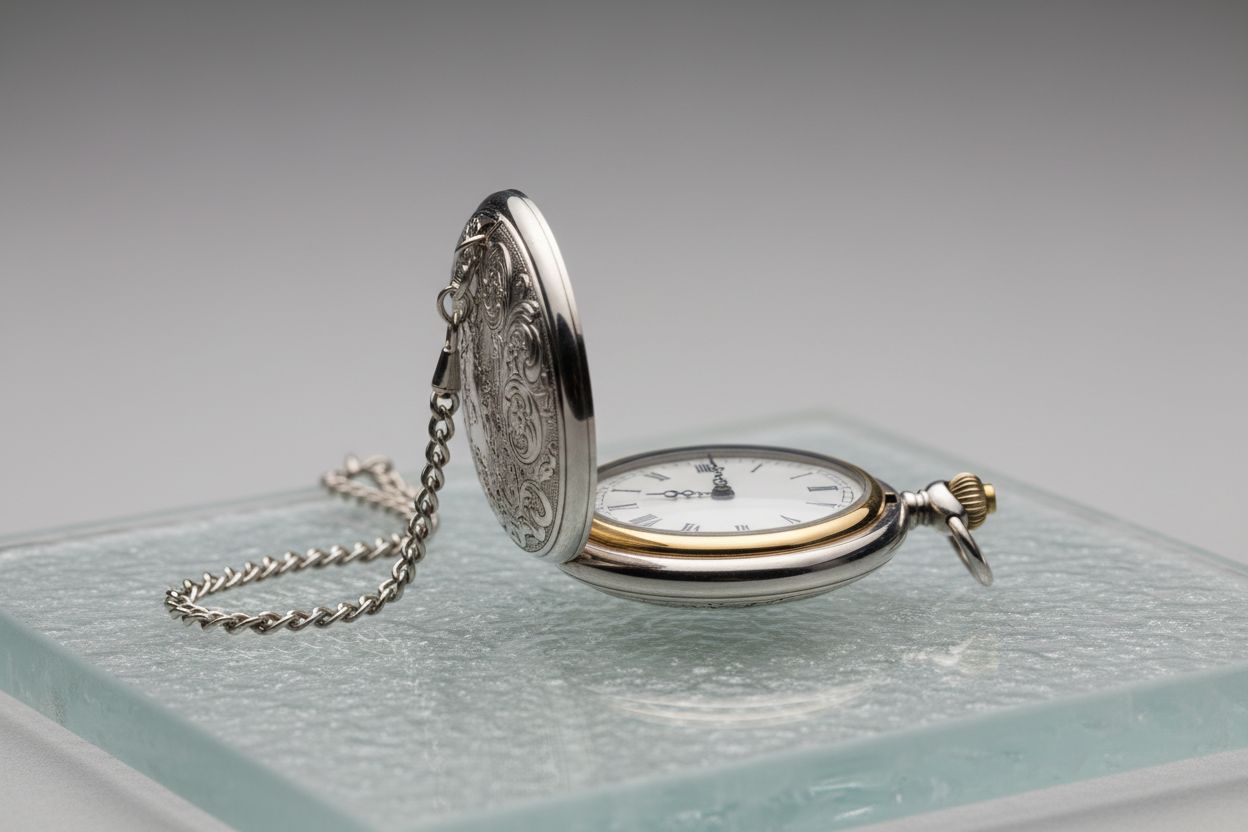
Cleaning the case and chain of a pocket watch is essential to preserving its luster and longevity. To begin, it is recommended to use a fine brush with soft bristles to dislodge the dust accumulated in crevices. This helps prevent scratches during subsequent cleaning steps. Next, for embedded dirt, blowing with compressed air or using a can of compressed air is an effective method. Regarding stains on the case, a soft microfiber cloth is ideal, as it cleans without scratching and avoids damaging the crystal. Avoid aggressive cleaning agents that could alter the finish of your timepiece.
It is equally vital to pay attention to the watch chain. Regular maintenance of this component prevents the accumulation of dirt and oil. Using a microfiber cloth, you can gently wipe the chain to maintain its brilliance. Should you notice stubborn stains, a mild soapy water solution may be used with caution, taking care not to submerge the chain, especially if it features delicate craftsmanship.
Care of the Dial and Crystal
Caring for the dial and crystal of your pocket watch is equally crucial to guaranteeing its precision and aesthetics. For the dial, a simple microfiber cloth generally suffices to remove fingerprints and dust. In the event of persistent marks, dampen the cloth slightly, taking utmost care not to wet the dial directly, as moisture could compromise the internal mechanism. The use of glass cleaners must be strictly avoided, as they may leave residues or degrade the dial's finish.
Regarding the crystal, regular cleaning helps maintain absolute transparency and prevents scratches. For this, a soft cloth remains the optimal choice. Should you notice imperfections on the glass, a small amount of toothpaste applied delicately can serve to polish the surface, though you must wipe it thoroughly to remove any residue. Attending closely to these details will allow you to keep your watch in pristine condition for years to come.
Winding and Mechanism Operation
Importance of Winding and Recommended Frequency
Winding your pocket watch is essential to guaranteeing its optimal operation and precision. A properly wound mechanism ensures that the timepiece continues to function correctly, storing the energy required to move the hands. Neglecting this step can lead to accuracy issues and premature wear of internal components. For effective maintenance, it is advised to wind your watch manually every day, particularly if it is a manual-wind movement. This ensures the mainspring remains properly tensioned.
For self-winding (automatic) watches, weekly winding may suffice. However, if the watch is not worn regularly, daily winding remains preferable to prevent any malfunction. When in doubt, consulting a professional horologist is a wise course of action to avoid potential damage.
How to Open and Wind Your Watch Correctly
Opening and winding a pocket watch requires precision and a degree of expertise. To begin, it is important to identify the specific type of watch you own: hunter-case, screw-back, or snap-back. Each variety demands distinct opening techniques. For instance, with a hunter-case watch, one simply presses the crown or releases a latch. For screw-back models, utilizing a specialized case opener is recommended, whereas for removable-back styles, a watchmaker's knife will suffice.
Once opened, it is crucial to wind the mechanism with gentle care. For manual-wind models, simply turn the crown clockwise until a subtle resistance is felt. For automatic variants, wearing the watch or winding it manually ensures its smooth operation. By following these steps, you preserve not only the integrity of the timepiece but also its exquisite aesthetics and value through the passage of time.
Related tags
Comments
Comments are coming soon.