Second-Hand Luxury Jewelry: The 2026 Jewelry Trend
Buy better with second-hand luxury jewelry: rarity, heritage value, and expert advice for a responsible experience.
Aurelia
09 August 2026
Acquiring or reselling exceptional pieces in 2026 requires understanding the advantages of second-hand luxury jewelry, the most sought-after categories, essential authentication criteria, and the heritage value of these creations, in order to foster an informed, elegant, and responsible purchase.
Pre-owned jewelry asserts its style
In 2026, wearing pre-owned jewelry is no longer a compromise. It is an assertive choice. Antique, vintage, and contemporary pieces that have already been worn captivate with their singularity. Their artisanal craftsmanship is sometimes absent from current collections. Four out of ten French people have already taken the plunge or are considering doing so, a dynamic largely driven by younger generations, who now approach second-hand purchases without hesitation.
The charm of rare pieces
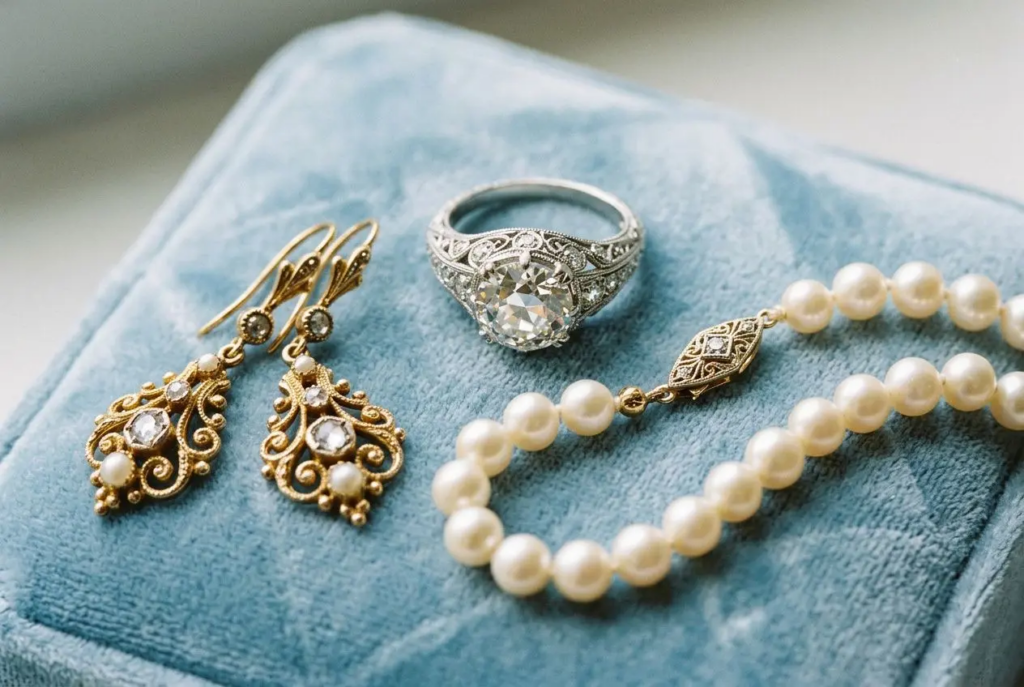
The difference lies in rarity: an antique or vintage piece is often no longer found in boutiques. Art Deco creations combine diamonds, sapphires, or rubies with clean geometric lines; Victorian pieces favor more detailed shapes and manual finishes of great precision. Turning to second-hand luxury jewelry offered by specialized platforms provides access to discontinued models whose character cannot be identically reproduced in contemporary catalogs.
- Stylistic exclusivity: each antique piece bears the characteristics of its era, with little risk of finding the exact same creation on someone else.
- Access to unobtainable models: certain iconic models, discontinued or produced in small series, are only accessible through circular jewelry, outside of traditional distribution channels.
- Preserved craftsmanship: the artisanal finishes of antique jewelry, often handcrafted, bear witness to jewelry techniques that have become rare or costly to reproduce.
Fourteen percent of second-hand jewelry buyers explicitly mention the desire to own a vintage and original piece to stand out from standardized objects.
Vintage and modern in everyday life
Pairing an antique piece of jewelry with a contemporary outfit creates an elegant contrast, particularly sought after in the accessory trends of 2026. An Art Deco dome ring worn with a structured jacket, or an 18-karat yellow gold sautoir slipped over a simple collar: the balance works because quality second-hand jewelry possesses a visual presence that mass production struggles to equal.
Iconic collections—Alhambra, Trinity, Love, Coco Crush, and Serpenti—contribute to this appeal when offered in reliable and documented conditions. Unlike an impulse buy, choosing a period piece or a Maison creation on the second-hand market requires careful examination of the available offer.
The most desired luxury pieces
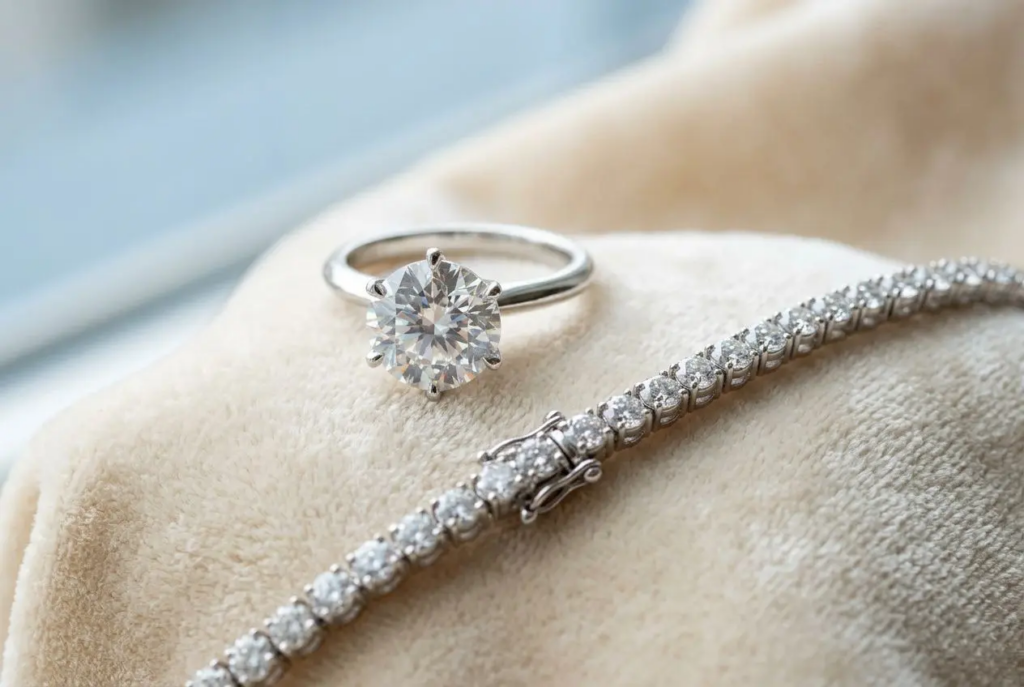
The pre-owned jewelry market ranges from solitaire rings to diamond rivers, not to mention pearl necklaces and Maison bracelets. These categories allow for refining a search based on the desired mounting, metal, and stylistic period.
Iconic rings and bracelets
Rings account for a large share of searches: white gold or platinum solitaires, exceptional wedding bands, dome rings with assertive volumes, and cluster rings with delicate floral settings. Major brand pre-owned jewelry, such as a Mauboussin ring or a Van Cleef & Arpels Alhambra bracelet, grants access to a strong signature at a price significantly lower than new retail.
These models retain their value when demand remains sustained. First check the condition of the setting, the presence of hallmarks, and the consistency between the piece, its box, and any accompanying documents.
Necklaces, sautoirs, and precious pendants
Necklaces offer particularly rich terrain in circular jewelry. A sober white gold chain can sit alongside a platinum diamond river or a cultured pearl necklace featuring an 18-karat yellow gold clasp; each piece serves a distinct purpose and aesthetic.
Searching for second-hand luxury jewelry in Paris provides access to creations stemming from the great French jewelry tradition, sometimes accompanied by their original case and precise documentation regarding their provenance. In 1925, the International Exhibition of Modern Decorative and Industrial Arts in Paris helped spread the Art Deco aesthetic, notably recognizable by its geometric lines in jewelry.
18-karat gold sautoirs and pendants appeal for their versatility: worn alone, they structure a silhouette; layered, they create a sense of depth. Earrings, diamond studs, gold hoops, and colored stone drops complete a pre-owned suite without requiring the budget of a new set.
Preferred metals and stones
Yellow gold, white gold, and rose gold produce distinct effects. Rose gold brings a warm and feminine tone, particularly appreciated on rings and pendants; white gold and platinum offer a neutral setting for white stones that enhances their brilliance.
Platinum is sought after for its exceptional durability and hypoallergenic nature. It is therefore well-suited for everyday wear jewelry.
Among precious stones, diamonds are the primary choice, followed by rubies, emeralds, sapphires, and garnets. These gems can be paired with genuine pearls, mother-of-pearl, or lapis lazuli, depending on the stylistic period and the Maison of origin. Once the mounting is identified, the nature of the stone guides the gemological evaluation to be conducted before any commitment.
| Metal | Main characteristic | Preferred use |
| 18-karat yellow gold | Classic warmth, asserted heritage value | Pearl necklaces, sautoirs, antique-style rings |
| 18-karat white gold | Elegant neutrality, enhancement of stones | Solitaires, wedding bands, diamond earrings |
| 18-karat rose gold | Warm and feminine tone | Rings, pendants, contemporary bracelets |
| Platinum | Maximum durability, hypoallergenic | Diamond rivers, everyday solitaires |
Choosing reliable pre-owned jewelry
Authenticity remains the primary point to verify: 31% of non-buyers of pre-owned jewelry fear counterfeits or a lack of guarantees. To find the best pre-owned jewelry website or the most reliable specialized platform, first examine its appraisal protocols.
Essential checks
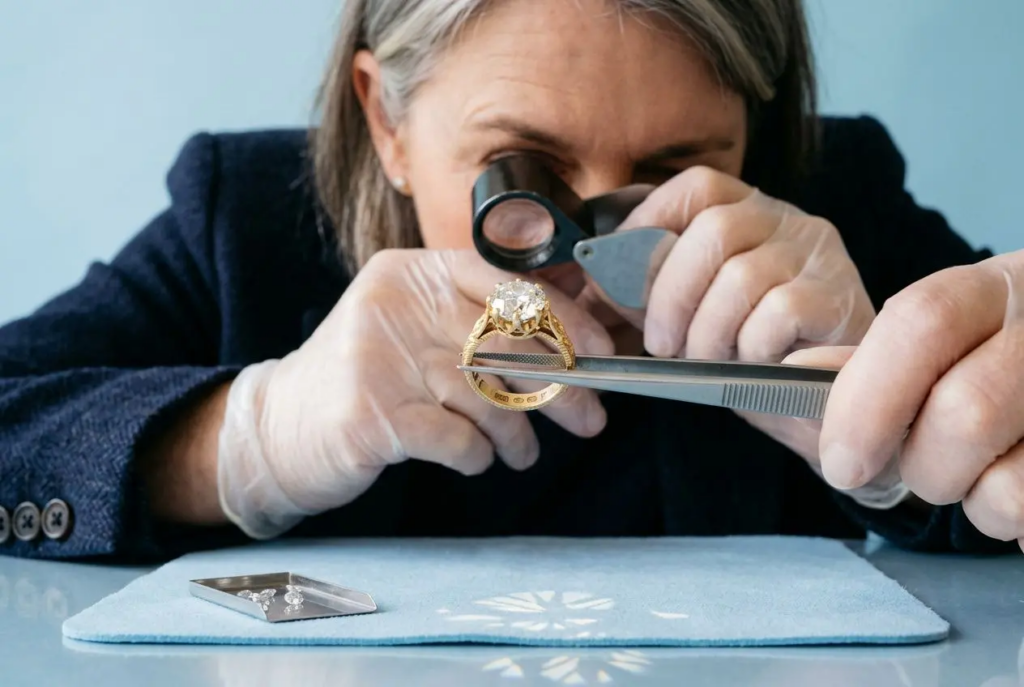
Before purchase, quality jewelry must undergo a complete gemological appraisal. This covers the authenticity of the stones, the condition of the settings, the sturdiness of the mounting, and the legibility of the official hallmarks stamped on the metal. 18-karat gold corresponds to the 750/1000 fineness; depending on the metal, French hallmarks such as the owl, the horse's head, or the eagle's head help identify and certify the fineness.
- Official hallmarks: the presence of the fineness hallmark—horse's head for gold, eagle's head for platinum—confirms the precious metal content and rules out non-compliant alloys.
- Condition of settings: a loose or altered setting weakens the stone and can lead to its loss. This check is therefore crucial for the security and durability of the jewelry.
- Double professional verification: an initial appraisal completed by a jeweler's inspection prior to delivery reinforces the reliability of the offered piece.
A detailed invoice must accompany every purchase. It specifies the authenticity, metal, stones, period, weight, and size of the jewelry. This document ensures essential traceability for future resale or insurance appraisal; without it, even a remarkable model loses part of its heritage value.
Recognizing a well-appraised stone
For diamonds, evaluation relies on the 4Cs: carat (weight), cut, color, and clarity. Standardized by international gemology, these criteria allow for objectively comparing two stones and explaining the price difference between two seemingly similar pieces of jewelry. The difference lies in their precise combination.
For colored stones—rubies, emeralds, sapphires, garnets—the appraisal verifies the intensity and homogeneity of the hue, the absence of inclusions visible to the naked eye, and the compliance of any treatments with market standards. Quality pre-owned jewelry must be offered in very good condition.
A reputable online pre-owned jewelry consignment store accompanies each piece with a certificate of authenticity drafted by an approved expert, member of a recognized professional organization. This document engages the expert's liability and provides a formal guarantee regarding the nature of the jewelry, beyond a simple commercial description.
Finding a certified selection
Valordiams offers a selection of 18-karat gold second-hand luxury jewelry: vintage or contemporary rings, necklaces, bracelets, and earrings, all carefully appraised.
Each piece of jewelry is shipped within 24 hours worldwide by professional carriers, via secure and insured delivery. In addition, the jewelry workshop after-sales service offers, depending on the piece, polishing, cleaning, or resizing. A well-chosen pre-owned piece can thus benefit from support close to that of a new boutique purchase.
Responsible and heritage luxury
Choosing luxury pre-owned jewelry means combining aesthetic exigency, ecological sensitivity, and a heritage vision. In 2026, this consistency aligns with the expectations of contemporary elegance: meaning as much as style, and a piece designed to last as much as to allure.
Buying better without sacrificing prestige
Buying second-hand luxury jewelry generally saves 30 to 50% compared to the price of an equivalent new piece. Quality remains guaranteed when the expertise is rigorous. Price constitutes the primary motivation for 47% of respondents, with 27% citing it as their main argument; 20% of buyers also mention access to luxury brands or pieces at a more accessible price point.
- Significant savings: a 30 to 50% reduction compared to retail opens up access to Maison creations that would otherwise remain out of reach at boutique prices.
- Access to major signatures: emblematic models from recognized Maisons, notably certain rings or bracelets from iconic collections, can be found in circular jewelry at prices the new market no longer practices.
- Enhanced quality-value ratio: new or like-new pieces occasionally appear at second-hand prices, particularly when coming from jewelry Maison clearance sales.
Among 35 to 44-year-olds, investment ranks as the third purchasing motivation.
Long-term value criteria
Several criteria influence a piece's ability to maintain or increase its value, and subsequently to be passed down as part of a family inheritance.
- Rarity: a discontinued model or one produced in a limited series gains interest as available examples become scarcer on the secondary market.
- Provenance and signature: jewelry from major Maisons relies on recognized craftsmanship, international renown, and sustained demand for their emblematic creations.
- Condition of preservation: a piece in very good condition, without structural modification or significant signs of wear, resells and transmits under better conditions than a retouched or damaged jewelry piece.
- Metal and stones: 18-karat gold crafted by master jewelers offers long-term appreciation potential; precious stones of certified quality, such as diamonds evaluated according to the 4Cs, rubies, or fine emeralds, reinforce this potential.
18-karat gold, like platinum, supports long-term value through its intrinsic quality. An 18-karat gold piece accompanied by its hallmarks, detailed invoice, and, where applicable, its original box, meets strong conditions for integration into sustainable family succession.
This alliance between aesthetic enjoyment and preservation of value explains the appeal of second-hand jewelry among a demanding and discerning clientele, far beyond the single argument of price.
Giving a new life to jewelry
Choosing an existing piece extends its lifecycle and avoids mobilizing the natural resources required to manufacture new jewelry. Purchasing authenticated and renovated jewelry helps reduce the footprint of new production; 10% of buyers explicitly cite the eco-responsible approach among their motivations. This awareness is growing, driven by a generation of female consumers who no longer pit luxury against responsibility.
By welcoming it, the new owner adds a personal chapter to this jewelry heritage, transforming the purchase into a gesture of cultural and artisanal continuity. A well-chosen pre-owned piece does not age: it deepens.
Related tags
Comments
Comments are coming soon.