The Signet Ring: History, Meaning, and Which Finger to Wear It On
From the wax seal to the fashion jewel: the history of the signet ring, its meaning, which finger and which hand to wear it on, for her as well as for him.
This article contains affiliate links: if you buy after clicking, Orzyla may earn a commission at no extra cost to you.
Aurelia
13 September 2026
Long reserved for coats of arms and men of power, the signet ring has become a fashion statement worn as much for its allure as for its history. Subtle or sculptural, engraved or smooth, it brings character to the hand, for both women and men.
“The signet ring does not merely adorn a hand. It tells a story about the person wearing it.”
Here is the history of the signet ring, what it signifies, and which finger and hand to wear it on according to tradition.
The History of the Signet Ring
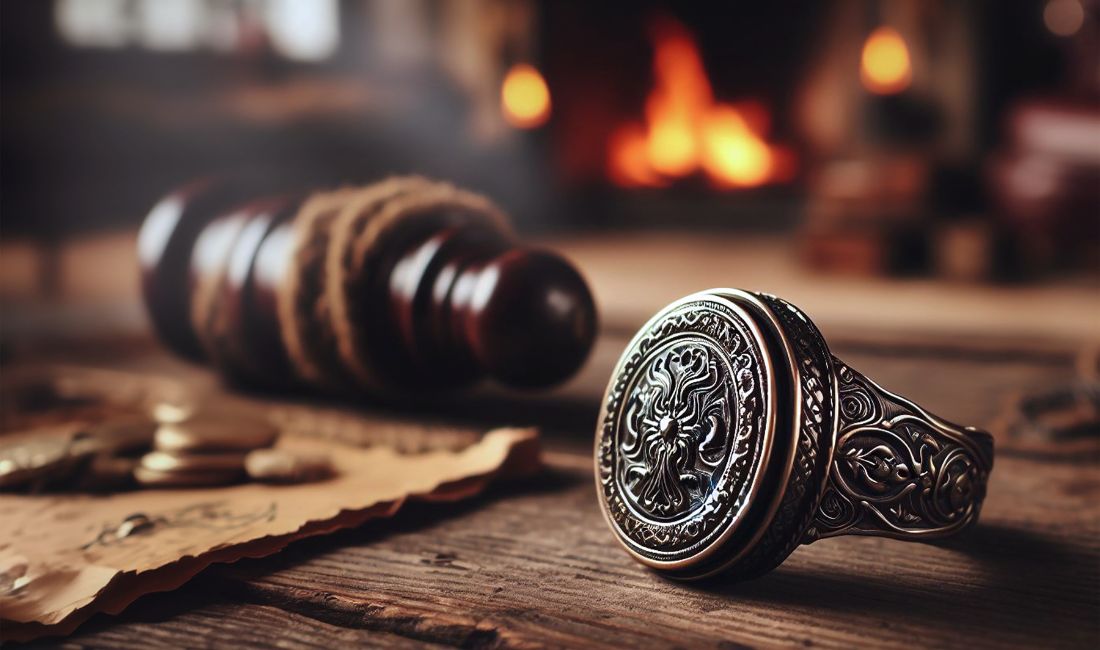
The signet ring is one of the oldest pieces of jewelry in the world. In antiquity, in Egypt, Greece, and Rome, it served as a seal: a crest, symbol, or initials were engraved on its face and pressed into warm wax to authenticate a letter or document.
In the Middle Ages, the signet ring became the jewel of noble families and guilds. It bore coats of arms, was passed down from generation to generation, and signified lineage. The engraved seal served as absolute proof, much like a signature.
Over time, the sealing function disappeared, but the jewelry remained. In the twentieth century, the signet ring was democratized and lost its strictly heraldic character. Today, it is worn for its style—engraved with initials, a personal symbol, or simply left smooth—by women and men alike.
What Wearing a Signet Ring Signifies
The signet ring retains a symbolic weight, even detached from its original coat of arms.
Worn engraved with initials or a crest, it evokes transmission and a deep attachment to family history. Many receive one for a milestone in life, a coming-of-age, or a birthday, and cherish it for years.
Worn smooth or adorned with a stone, it becomes a style statement, chosen for its allure and presence, without heraldic significance. Today, this is the most widespread usage, particularly among women.
There are no longer strict rules: one wears a signet ring for what it represents to them, whether heritage or simply a love of beauty.
Which Finger to Wear a Signet Ring On
This is the most frequently asked question, and the answer relies as much on tradition as on personal taste.
Traditionally, the signet ring is worn on the pinky (the little finger) of the left hand. This custom stems from the era when the seal needed to remain visible and accessible for stamping documents.
The ring finger is the other classic choice, provided one avoids confusion with a wedding band. Some wear it on the ring finger of the right hand for this reason.
Today, the rule has relaxed: you wear the signet ring on the finger where it sits best and pleases you most. The pinky remains the most elegant and truest to tradition, but nothing prevents wearing it on another finger.
Which Hand and the Direction of the Engraving
The hand and the orientation of the coat of arms once followed precise codes.
In France, tradition dictates that a man wears the signet ring on his left hand, with the crest engraved “in a hand-kiss” orientation—meaning right-side up for someone looking at the outstretched hand, and thus upside down for the wearer. A signet ring engraved “in combat” orientation, right-side up for the wearer, once indicated a more combative state of mind.
Today, these heraldic codes apply only to crested signet rings. For a fashion signet ring featuring initials or a stone, it is engraved right-side up for the wearer and worn on whichever hand is preferred.

The Signet Ring for Women
The signet ring is no longer exclusively masculine. For women, it has established itself as a strong and assertive piece.
Worn on the pinky or ring finger, it adds character to a delicate hand. It is chosen in a more delicate scale than a men’s signet ring, or conversely, deliberately oversized for a statement effect. Adorned with a stone, engraved with an initial, or left smooth, it is worn alone or stacked with other delicate rings.
It is a piece of jewelry that stands entirely on its own: a well-chosen signet ring dresses a hand with need of nothing else. They can be found in every style at Histoire d’Or and Marc Orian, from gold to plated, from engravable models to ornate versions. For a more colorful and graphic piece, Agatha offers lovely signet rings, such as the wide Pangea ring, born from a collaboration, in 18k gold-plated brass and natural stone, featuring a secret message engraved inside, or a model with a turtle motif.
The Signet Ring for Men
For men, the signet ring remains a wardrobe classic, straddling the line between heritage and style.
Worn on the pinky, it pairs with a watch and cufflinks for a tailored look, or stands alone on a bare hand for greater sobriety. It can be chosen solid and understated, engraved with initials or a crest, or rendered more graphic in modern iterations. We discuss this further in our men's jewelry guide.

How to Choose and Care for Your Signet Ring
A few guidelines to help you choose wisely and keep your jewelry looking beautiful.
The metal is chosen according to taste and skin tone: yellow gold for a warm, classic finish; white gold or silver for a modern style; gold-plated for an accessible price point. The size of the face sets the tone, whether subtle or assertive, tailored to the hand. The engraving, if desired, should remain legible and sober.
As for maintenance, gold should be cleaned with a soft cloth and lukewarm soapy water, while silver can be revived with a specialized cloth. It is best to remove the signet ring during manual labor and sports to prevent impacts and scratches. Our advice on cleaning your jewelry applies equally to it.
In a Word
Born as a seal in antiquity, the signet ring has evolved into a stylish jewelry piece worn for its allure by both women and men. Tradition places it on the pinky of the left hand, but modern usage is entirely liberated. Engraved with initials for heritage or smooth for style, it dresses a hand all by itself. An ancient jewel, rich with history, and more relevant than ever.
Frequently Asked Questions
Which finger to wear a signet ring on? Traditionally on the pinky (the little finger) of the left hand, a custom inherited from the era of seals. The ring finger is the other classic choice, while avoiding confusion with a wedding band. Today, it is worn on whichever finger pleases you most.
What does a signet ring signify? Engraved with initials or a crest, it evokes heritage and family history. Smooth or adorned with a stone, it becomes a style statement without heraldic meaning. Everyone gives it whatever significance they wish.
Can a woman wear a signet ring? Yes, it is even a major trend. For women, the signet ring is worn on the pinky or ring finger, in a delicate version or oversized for a statement effect, adorned with a stone, engraved, or smooth.
Which hand should you wear the signet ring on? French tradition places it on the left hand. For a crested signet ring, the coat of arms is engraved “hand-kiss” style, right-side up for whoever is looking at the outstretched hand. For a fashion signet ring, it is worn on the hand of your choice.
How to choose your signet ring? According to the metal (classic yellow gold, modern white gold or silver, accessible plated), the size of the face (subtle or assertive), and any potential engraving, which must remain legible and sober. It should be adapted to the size of your hand.
Stay Connected with Orzyla!
To make sure you don’t miss any of our jewelry, fashion, and accessory trends, guides, and discoveries, follow Orzyla on Facebook, X, and Instagram.
Related tags
Comments
Comments are coming soon.